
Fiber business internet is the strongest overall pick for 2026, delivering symmetrical upload and download speeds that cable, DSL, and satellite can't match. Fixed wireless, cable, DSL, and satellite still win specific situations — temporary sites, legacy buildings, rural single locations, and places with zero terrestrial infrastructure.
- Fiber business internet services win overall in 2026 on symmetrical speed and uptime.
- SumoFiber runs fiber business internet across 8 states: Utah, Idaho, Montana, Colorado, California, Wisconsin, Illinois, and New York.
- Fixed wireless business internet fits temporary sites and backup circuits, not primary connections for heavy uploads.
- Satellite is the only option with zero terrestrial dependency, but geostationary latency runs around 600 milliseconds.
- The FCC's 2026 broadband benchmark sits at 100 Mbps download and 20 Mbps upload — many DSL and older cable plans fall short of it.
Why this matters
A slow upload speed doesn't show up until the moment it matters: a video call freezes, a cloud backup stalls overnight, a point-of-sale system times out during a rush. Business internet services get judged on the worst five minutes of the week, not the average.
The FCC raised its baseline broadband definition to 100 Mbps download and 20 Mbps upload, and that gap between download and upload speed is exactly where most connection types fall apart for business use. Fiber closes that gap because upload and download run at the same speed on the same line. SumoFiber runs fiber business internet plus managed WiFi, phone, TV, and mobile service across Utah, Idaho, Montana, Colorado, California, Wisconsin, Illinois, and New York — 8 states where a business can run its whole connectivity stack through one provider instead of four.
Not every connection type is interchangeable, and picking the wrong one for your building type or location wastes both money and uptime.
What makes the best business internet service
- Symmetrical speed — upload matters as much as download for video calls, backups, and cloud tools.
- Uptime and reliability — a connection that stays up during storms, peak hours, and local network congestion.
- Scalability — adding bandwidth or locations without waiting on new construction.
- Support responsiveness — a real person answering, not a phone tree, when the connection drops mid-shift.
- Contract flexibility — no multi-year lock-in and no data caps that throttle a busy month.
- Bundling — WiFi management, phone, and TV on one bill instead of four vendors.
Best overall: fiber business internet. Best for temporary or backup connectivity: fixed wireless. Best for download-heavy legacy offices: cable. Best budget option for very rural single locations: DSL. Best for zero-infrastructure remote sites: satellite.
Business internet services at a glance
| Connection type | Best for | Standout feature | Key limitation |
|---|---|---|---|
| Fiber | Growing teams needing reliable uploads | Symmetrical speed | Not yet built to every address |
| Fixed wireless | Temporary sites, backup circuits | Fast install, no digging | Weather and line-of-sight sensitive |
| Cable | Legacy offices, download-heavy use | Wide urban availability | Asymmetrical, congests at peak hours |
| DSL | Very rural, single-location offices | Works almost anywhere a phone line reaches | Slowest upload of any wireline option |
| Satellite | Remote sites with no wireline option | Works anywhere with sky view | High latency, capped data |
1. Fiber: best business internet for growing teams
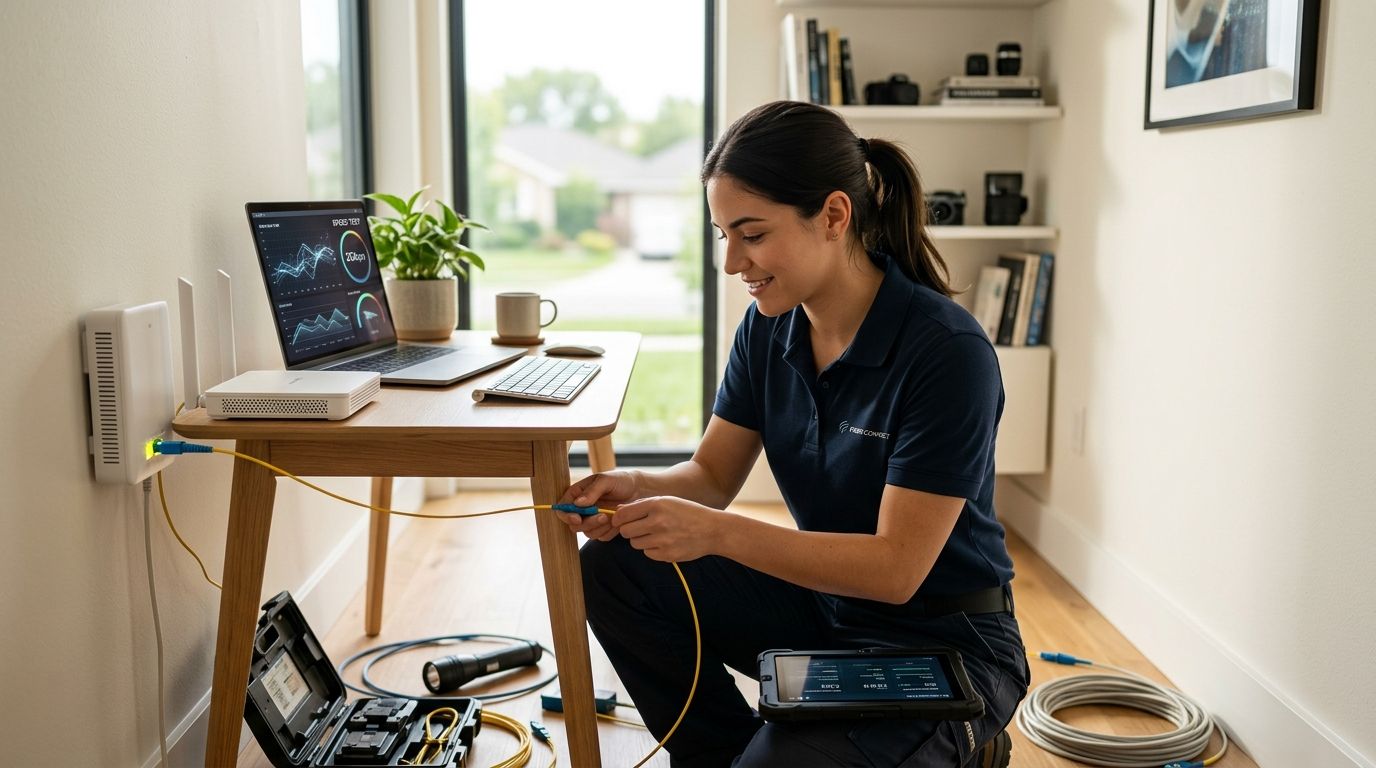
Fiber runs light through glass instead of electricity through copper, which is why upload speed matches download speed on the same line. That symmetry is the whole reason fiber leads this list for 2026 — a business backing up files, running cloud-based POS, or hosting video calls needs upload bandwidth just as much as download.
SumoFiber pros:
- Symmetrical upload and download speeds on the same connection
- Bundles managed WiFi, phone, TV, and mobile with the internet line
- 24/7 human support answers calls instead of routing to a bot
- No long-term contracts or data caps tied to the plan
SumoFiber cons:
- Fiber build-out hasn't reached every address yet across the 8 states served
- New construction to a building can take longer than swapping an existing cable line
- A backup circuit (fixed wireless or satellite) is still worth having for total redundancy
Best for: offices that depend on steady uploads — video calls, cloud backups, remote teams, point-of-sale syncing. Verdict: Buy.
2. Fixed wireless: best business internet for temporary or backup connectivity
Fixed wireless beams a signal from a nearby tower to an antenna on the building, skipping the digging and cabling that wireline options need. That makes it the fastest connection type to install when a business can't wait weeks for a build.
Fixed wireless pros:
- Installs in days, not weeks, since there's no trenching
- Solid middle-ground speed for a single office
- Works well as a backup circuit behind a primary fiber or cable line
Fixed wireless cons:
- Heavy rain or snow can degrade the signal
- Performance depends on a clear line of sight to the tower
- Upload speed typically trails fiber by a wide margin
Best for: construction sites, pop-up locations, and businesses that want a backup line in case the primary connection drops. Verdict: Buy for backup, Wait for primary.
3. Cable: best business internet for download-heavy legacy offices
Cable business internet rides the same coaxial lines that carry cable TV, which is why it's widely available in cities and suburbs where fiber hasn't landed yet. It handles heavy downloads well but was built for asymmetrical home use, not business uploads.
Cable pros:
- Wide availability in urban and suburban commercial buildings
- Higher download speeds than DSL in most markets
- No new construction needed where the line already runs
Cable cons:
- Upload speed lags far behind download speed by design
- Shared local nodes can slow speeds during peak hours
- Fewer bundling options for phone and managed WiFi than fiber providers offer
Best for: retail storefronts or offices where downloading matters more than uploading. Verdict: Hold if fiber isn't available yet.
4. DSL: best business internet for very rural single-location offices
DSL business internet runs over existing copper phone lines, so it reaches almost anywhere a landline reaches. It's the cheapest connection to get installed, but distance from the provider's central office directly caps the speed a building can get.
DSL pros:
- Available in areas fiber and cable haven't reached
- Lower cost of entry than most other connection types
- Fine for basic email, browsing, and light cloud use
DSL cons:
- Speed drops the farther the building sits from the provider's hub
- Upload speed is the slowest of any wireline option on this list
- Copper infrastructure ages, and reliability can slip over time
Best for: a single rural office with light internet needs and no fiber or cable line nearby. Verdict: Wait, or check for fixed wireless first.
5. Satellite: best business internet for remote sites with no wireline option
Satellite connects a building to the internet through a dish pointed at orbit, either a geostationary satellite or a low-earth-orbit constellation. It's the only option on this list that works with zero dependence on ground infrastructure, which matters for sites where nothing else physically reaches.
Satellite pros:
- Works virtually anywhere with a clear view of the sky
- No dependence on local towers, cable plants, or phone lines
- Useful as a disaster-recovery backup for any business
Satellite cons:
- Geostationary systems carry latency around 600 milliseconds round trip, which hurts video calls
- Weather can interrupt the signal more than wireline options
- Monthly data allowances are often capped
Best for: agricultural operations, remote job sites, or backup connectivity where nothing else exists. Verdict: Buy only if it's the only option.
How this list was ranked
Each connection type got measured against the same six criteria: symmetrical speed, uptime, scalability, support responsiveness, contract flexibility, and bundling. Fiber wins on four of the six outright, which is why it sits at the top for 2026. Fixed wireless and satellite earn their spots on availability and speed of install, not on raw performance.
“A connection gets judged on the worst five minutes of the week, not the average.”
Which business internet service should you choose?
If fiber business internet reaches your address, take it — the symmetrical speed and single-vendor bundling solve more problems than any other option on this list. Businesses in Lehi, Utah can compare fiber options directly against other connection types serving the area.
If fiber hasn't been built to your building yet, fixed wireless is the next best primary option for most offices, with satellite reserved for locations that have no other choice. Cable and DSL still work, but plan on outgrowing them as your team's upload needs grow.
Check fiber availability at your business
See what SumoFiber's business internet, WiFi, and support options look like in your area.
FAQ
What's the best business internet service in 2026?
Fiber business internet is the strongest overall pick for 2026 because it delivers symmetrical upload and download speeds. Fixed wireless, cable, DSL, and satellite each fit narrower situations like temporary sites or remote locations.
Is fiber internet better than cable for business?
Yes, for most businesses. Fiber delivers matching upload and download speeds, while cable's upload speed lags well behind its download speed.
How much upload speed does a small business need?
Enough to cover video calls, cloud backups, and any point-of-sale syncing running at the same time. The FCC's 2026 broadband benchmark sets 20 Mbps upload as the baseline, and businesses running multiple simultaneous connections need more.
What is the FCC's broadband speed standard in 2026?
The FCC's benchmark is 100 Mbps download and 20 Mbps upload. Many older DSL and cable plans fall short of that upload figure.
Can satellite internet work for a business?
Yes, but mainly where no terrestrial option exists. Geostationary satellite carries round-trip latency around 600 milliseconds, which affects video calls more than downloads.
Does SumoFiber offer business internet outside Utah?
Yes. SumoFiber runs fiber business internet, managed WiFi, TV, phone, and mobile service across 8 states: Utah, Idaho, Montana, Colorado, California, Wisconsin, Illinois, and New York.
What is fixed wireless business internet?
Fixed wireless delivers internet from a nearby tower to an antenna on the building instead of running a cable underground. It installs fast and works well as a backup connection behind a primary fiber or cable line.
Do business internet plans require long-term contracts?
It depends on the provider. SumoFiber's business internet plans run without long-term contracts or data caps.
One last thing
The detail most businesses miss when comparing providers isn't the speed number on the flyer — it's what happens when the connection drops during a Tuesday afternoon rush. SumoFiber's business internet plans skip long-term contracts and data caps, and support in 2026 still means a real person picking up the phone, not a bot reading a script.