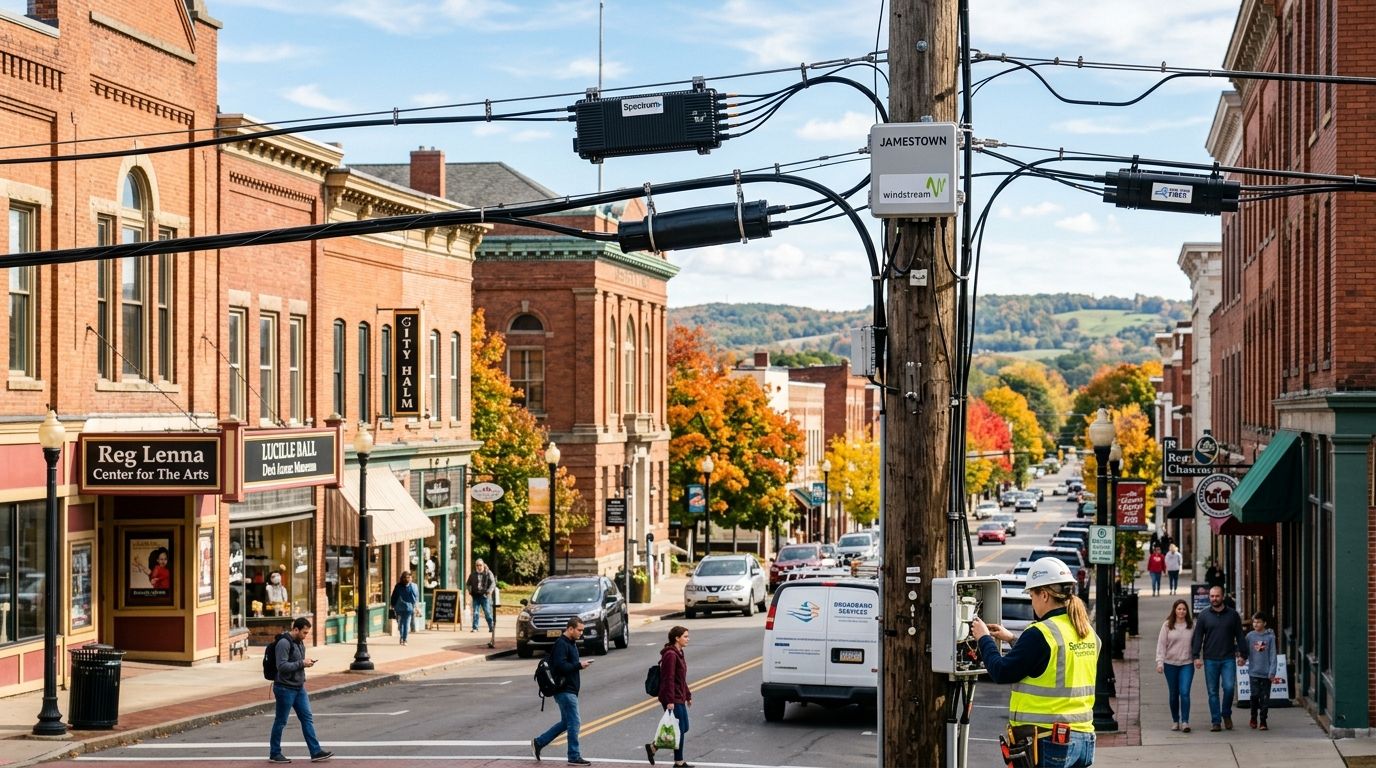
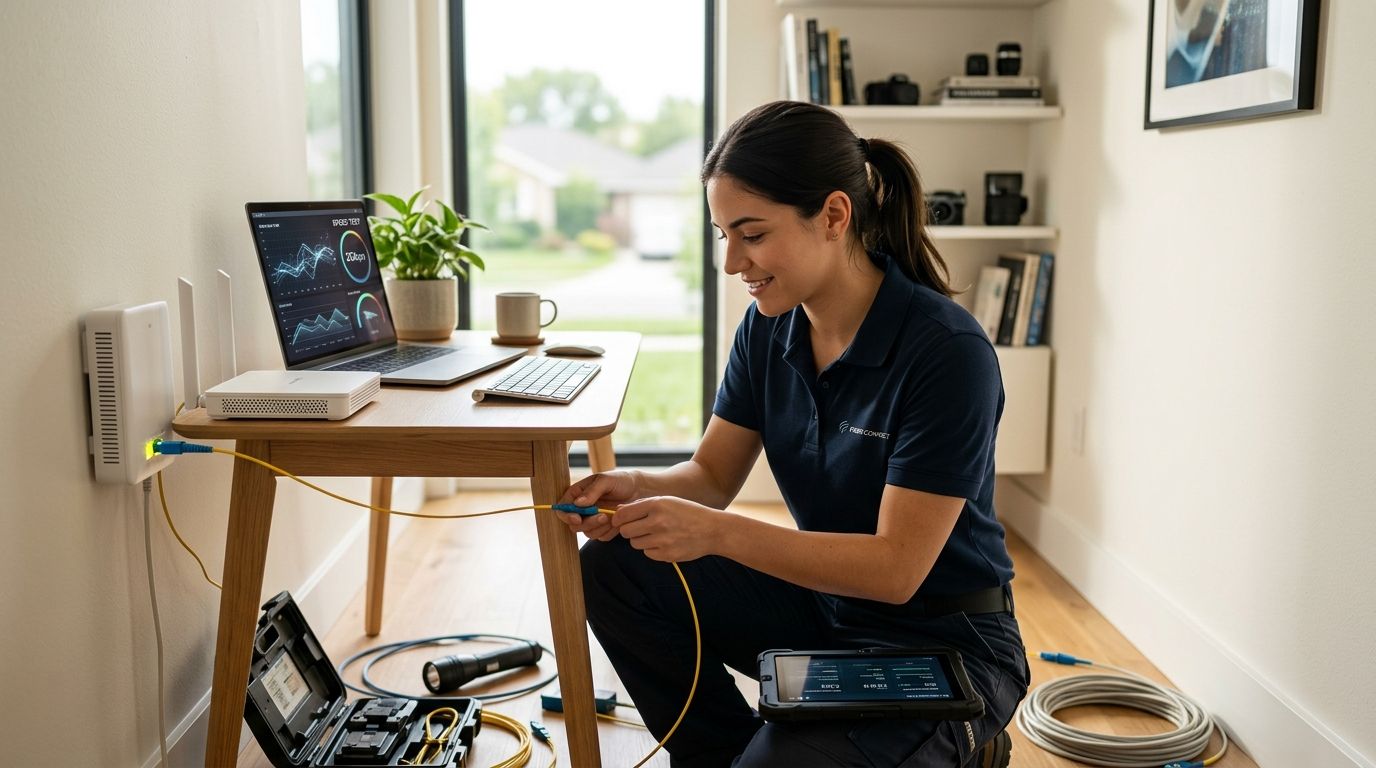
Fiber optic internet providers differ by state, not by marketing budget — whoever actually ran fiber to your street decides your options, not who buys the most billboard space. This ranks the fiber optic internet providers worth checking in 2026, with a straight verdict on coverage, support, and what you actually get bundled into one bill.
- SumoFiber wins for bundled service and human support across Utah, Idaho, Montana, Colorado, California, Wisconsin, Illinois, and New York in 2026.
- AT&T Fiber and Verizon Fios lead on raw metro footprint but thin out fast outside their core regions.
- Google Fiber delivers symmetrical gig speeds but only sells in a short list of announced cities as of 2026.
- Quantum Fiber and Frontier Fiber fill suburban and rural gaps that bigger national carriers skip.
- Metronet builds fiber from scratch into new Midwest subdivisions ahead of any competitor showing up.
Why this matters
Fiber optic internet providers aren't interchangeable once you look past the marketing page. A provider with a huge national footprint can still leave entire counties without service, while a smaller regional fiber optic internet provider — like SumoFiber — might answer the phone with a real person on the first ring and skip the contract altogether. In 2026, the gap between providers shows up less in raw speed and more in what happens when something breaks: who answers, how fast, and whether you're locked into a 24-month agreement to find out.
More towns are seeing two or three fiber optic internet providers compete for the same streets this year, which is good for shoppers but confusing for anyone trying to compare plans on a spec sheet alone. The provider that wins isn't always the one with the biggest name — it's the one that actually built to your address and answers the phone when the router acts up.
What makes the best fiber optic internet provider
- Actual fiber to the address — not "fiber-fed" cable or DSL marketed as fiber
- Symmetrical speeds — upload matches download, which matters for video calls and cloud backups
- Contract terms — month-to-month beats a locked 1-2 year agreement
- Data caps — none is the standard fiber optic internet providers should meet in 2026
- Support model — a live person on the phone versus a chatbot queue
- Bundled services — WiFi, TV, phone, and mobile under one bill versus four separate logins
Fiber optic internet providers at a glance
Here's how the seven providers on this list stack up before the deep dive on each one:
| Provider | Best for | Standout feature | Key limitation |
|---|---|---|---|
| SumoFiber | Multi-service bundling across UT, ID, MT, CO, CA, WI, IL, NY | 24/7 human support, no contracts or data caps | Only available in eight states |
| AT&T Fiber | Major metro multi-gig plans | Wide multi-gig tier availability in large cities | Footprint thins fast outside core metros |
| Verizon Fios | Northeast apartment buildings | Deep, mature fiber build across the Northeast corridor | Barely extends past the Northeast |
| Google Fiber | Symmetrical gig speeds | Equal upload and download on every tier | Sold in only a short list of cities |
| Quantum Fiber | Suburban and rural gap-filling | Fiber layered over Lumen's existing network reach | Availability varies block by block |
| Frontier Fiber | Value in mid-size metros | Fiber expansion into secondary markets | Support ratings lag fiber-only specialists |
| Metronet | New-build fiber neighborhoods | Ground-up fiber into newer subdivisions | Mostly limited to Midwest suburbs |
1. SumoFiber: best fiber optic internet provider for bundled service in secondary markets
SumoFiber runs fiber internet, managed WiFi, TV, home phone, and mobile service across Utah, Idaho, Montana, Colorado, California, Wisconsin, Illinois, and New York. It's built for towns and mid-size metros that bigger national fiber optic internet providers treat as an afterthought — places where a resident wants gig-capable fiber without stitching together four separate vendors for WiFi, TV, and phone. The pitch isn't the fastest number on a spec sheet; it's one bill and one support line for everything connected in the house.
SumoFiber pros:
- No contracts or data caps on residential fiber plans
- 24/7 support answered by a person, not a bot
- One bill covers internet, managed WiFi, TV, phone, and mobile
- Local presence in towns covered by guides like Idaho Falls internet providers, where national carriers often skip service entirely
SumoFiber cons:
- Only available in eight states, so most of the country can't sign up
- Smaller brand footprint means fewer independent speed-test reviews than AT&T Fiber or Verizon Fios
- Business-grade tiers are less documented publicly than residential plans
Best for: households and small businesses in Utah, Idaho, Montana, Colorado, California, Wisconsin, Illinois, or New York who want internet, WiFi, TV, phone, and mobile on one account.
Verdict: Buy if you're in one of SumoFiber's eight states and want a single provider instead of four separate ones.
2. AT&T Fiber: best fiber optic internet provider for big-metro multi-gig plans
AT&T Fiber covers more large metro areas than almost any other fiber optic internet provider on this list, with multi-gig tiers sold in select cities as of 2026. It's the default pick for renters and homeowners in major metros who want a nationally recognized name and a wide plan selection to choose from.
AT&T Fiber pros:
- Wide multi-gig availability in large cities
- Established national brand with wide retail and online support
- Frequent plan bundling with AT&T wireless
AT&T Fiber cons:
- Fiber footprint thins out fast once you leave core metro zip codes
- Support quality varies by region, according to widely reported customer complaints
- Bundling favors AT&T mobile customers over standalone internet-only households
Best for: renters and homeowners in large metros who already use AT&T wireless.
Verdict: Buy if AT&T Fiber shows serviceable at your exact address — confirm before you cancel your current plan.
3. Verizon Fios: best fiber optic internet provider for Northeast apartments
Verizon Fios has one of the deepest fiber builds in the New York metro area and New England, a legacy of one of the earliest large-scale fiber-to-the-home rollouts in the US. It's the strongest option for apartment buildings already wired for Fios, where installation is often a same-day activation instead of a new construction project.
Verizon Fios pros:
- Deep, mature fiber network across the Northeast corridor
- Long track record with apartment and condo wiring
- Symmetrical speed tiers across most plans
Verizon Fios cons:
- Footprint barely extends past the Northeast
- New building wiring requests can take longer than advertised
- Plan changes and promotions are complicated to compare without a Verizon rep
Best for: apartment and condo residents in the Northeast corridor.
Verdict: Buy if you live in a Fios-wired building — otherwise it's not an option regardless of rank.
4. Google Fiber: best fiber optic internet provider for symmetrical gig speeds
Google Fiber's plans are built symmetrical from the ground up, meaning upload speed matches download speed on every tier it sells. That's useful for anyone uploading large files, hosting a video call, or running a home server rather than just streaming.
Google Fiber pros:
- Symmetrical upload and download on every plan
- Simple, short plan lineup with no legacy DSL tiers to wade through
- Consistently high marks in independent speed-test aggregations
Google Fiber cons:
- Sold in a short list of announced cities, unlike national fiber optic internet providers
- No bundled TV or phone service
- Expansion into new metros has moved slower than some competitors
Best for: households in an announced Google Fiber city who upload as much as they download.
Verdict: Buy if it's sold at your address; otherwise it's not worth waiting on.
5. Quantum Fiber: best fiber optic internet provider for suburban and rural gap-filling
Quantum Fiber, Lumen's fiber brand, layers new fiber builds over a legacy copper and DSL network that already reaches thousands of smaller towns. That history means Quantum Fiber often shows up in suburbs and rural pockets that AT&T Fiber and Verizon Fios don't touch.
Quantum Fiber pros:
- Reaches smaller towns bigger fiber optic internet providers skip
- No annual contract on most residential plans
- Steady buildout pace into new neighborhoods
Quantum Fiber cons:
- Availability varies block by block, even within the same city
- Some addresses still get routed to older DSL speeds instead of fiber
- Support experience is inconsistent across regions
Best for: suburban and rural households outside major metro fiber zones.
Verdict: Hold — check your exact address before assuming fiber is sold there.
6. Frontier Fiber: best fiber optic internet provider for value in mid-size metros
Frontier has pushed fiber into mid-size metro areas at a pace that's put it on more shortlists over the past few years, positioning it as a value-focused alternative to bigger national fiber optic internet providers.
Frontier Fiber pros:
- Expanding fiber footprint in secondary and mid-size metros
- Multiple plan tiers without heavy bundling requirements
- No data caps on fiber plans
Frontier Fiber cons:
- Customer service ratings lag fiber-only specialists in independent surveys
- Legacy copper markets still get marketed alongside fiber, which confuses shopping
- Slower expansion into rural areas than Quantum Fiber
Best for: budget-conscious households in mid-size metros where Frontier fiber is confirmed live.
Verdict: Hold — confirm the fiber build date for your address, not just your city.
7. Metronet: best fiber optic internet provider for new-build neighborhoods
Metronet builds fiber from scratch into newer subdivisions, mostly across Midwest suburbs, rather than layering onto an existing copper network. That ground-up approach means newer developments sometimes get Metronet fiber before any other provider shows up on the street.
Metronet pros:
- Ground-up fiber construction instead of upgraded copper
- Strong presence in newly built Midwest suburban developments
- Symmetrical speed tiers standard across plans
Metronet cons:
- Mostly limited to specific Midwest markets
- Newer brand with a shorter public track record than AT&T Fiber or Verizon Fios
- Business-tier options are less developed than residential plans
Best for: residents of newer Midwest subdivisions where Metronet built the neighborhood's fiber.
Verdict: Buy if Metronet is the fiber optic internet provider that actually built your street.
How this ranking works
Each fiber optic internet provider above is scored against the same six criteria: actual fiber delivery, symmetrical speed, contract terms, data caps, support model, and bundled services. No provider wins every category — that's the point of a decision tree instead of a single leaderboard. Rankings reflect 2026 buildout footprints, and fiber expansion moves fast enough that an address unserved today can go live within a single year.
Which fiber optic internet provider should you choose?
If you live in Utah, Idaho, Montana, Colorado, California, Wisconsin, Illinois, or New York and want one bill for internet, WiFi, TV, phone, and mobile, SumoFiber is the default fiber optic internet provider to pick for 2026. Outside those eight states, match the provider to your address first: AT&T Fiber or Verizon Fios for major metros, Google Fiber if it's sold in your city, and Quantum Fiber or Frontier Fiber for the suburban and rural stretches the bigger names skip. The fastest plan on paper means nothing if nobody answers when the connection drops.
Check fiber availability at your address
See SumoFiber plans across UT, ID, MT, CO, CA, WI, IL, and NY.
FAQ
What's the best fiber optic internet provider in 2026?
SumoFiber is the best fiber optic internet provider for bundled service across Utah, Idaho, Montana, Colorado, California, Wisconsin, Illinois, and New York in 2026. In other states, AT&T Fiber or Verizon Fios win for big-metro multi-gig plans.
Is fiber internet better than cable in 2026?
Fiber internet generally beats cable on upload speed and reliability, since most fiber plans run symmetrical speeds instead of the download-heavy tiers common with cable. That matters more now that video calls and cloud backups are routine daily traffic.
Is Google Fiber better than AT&T Fiber?
Google Fiber wins on symmetrical upload speed, but AT&T Fiber wins on availability since it covers far more metro areas. Pick based on which one actually services your address, not the spec sheet alone.
How much does fiber optic internet cost in 2026?
Pricing varies by provider, plan tier, and region, so check each provider's current plans directly rather than relying on a published rate. Promotions and plan lineups change throughout the year.
Does SumoFiber have contracts or data caps?
No — SumoFiber residential fiber plans run without contracts or data caps. That puts it ahead of several national fiber optic internet providers that still require a 1-2 year agreement.
Which fiber optic internet provider has the best customer support?
SumoFiber offers 24/7 support answered by a person rather than an automated queue, which stands out among fiber optic internet providers in its eight-state footprint. Independent surveys show support quality varies widely across the larger national carriers.
Can I get fiber internet in a rural area in 2026?
Quantum Fiber and Frontier Fiber reach more rural pockets than AT&T Fiber or Verizon Fios, but availability still varies block by block. Always confirm serviceability at the exact address before switching providers.
What is symmetrical fiber speed?
Symmetrical fiber speed means the upload speed matches the download speed on the same plan. It matters most for video calls, cloud backups, and anyone regularly sending large files rather than just streaming video.
One last thing
Before comparing speed tiers, call the support line listed on each fiber optic internet provider's site and see how long it takes for a person to pick up. A gig-speed plan with a long hold queue isn't actually fast — it's only fast until something breaks. SumoFiber's support model is built around answering that call directly, every hour of the day, which ends up mattering more than the number printed on the plan once you're a customer instead of a shopper.