
Rural internet in 2026 isn't one product, it's five different technologies competing for the same driveway. Best overall for rural households: SumoFiber, for one-provider fiber internet with 24/7 human support across the eight states it serves. Best for spots with zero wired infrastructure: Starlink satellite internet. Best for line-of-sight rural properties near a tower: fixed wireless from a regional WISP. Best for strong-cellular-signal areas without a fiber build: 5G home internet from carriers like T-Mobile and Verizon. Best budget fallback where nothing else reaches: DSL over existing phone lines. The honest answer to "best rural internet providers" depends on what's actually buried, strung, or beamable near your house — not on a single winner.
- SumoFiber wins for rural households that want fiber plus WiFi, TV, phone, and mobile from one provider with 24/7 human support.
- Starlink is the only real option when no cable, fiber, or phone line reaches the property at all.
- Fixed wireless works well on line-of-sight rural land near a tower but degrades fast with trees or distance.
- 5G home internet from cellular carriers needs a strong local signal to be dependable, not just advertised coverage.
- DSL is the slowest option on this list but often the only backup when fiber and wireless both fail to reach.
Why this matters
Rural connectivity gaps aren't abstract in 2026 — they show up as a dropped telehealth call, a kid's homework upload that times out, or a restaurant's card reader freezing during dinner rush. SumoFiber builds fiber into small towns across Utah, Idaho, Montana, Colorado, California, Wisconsin, Illinois, and New York specifically because those gaps get worse the farther you are from a metro fiber ring.
Most "best internet provider" lists are written for cities where five wired options compete on the same block. Rural households usually have one or two real choices, and picking wrong means living with it for years. That's the gap this list closes.
What makes the best rural internet provider
- Speed consistency during peak evening hours, not just the advertised max speed
- Latency low enough for video calls and cloud-based work, not just streaming
- Weather resilience — storms, snow load, and high wind shouldn't take the connection down for days
- Real human support when something breaks, not a chatbot loop
- Contract terms and data caps, or the lack of them
- Whether the provider bundles WiFi management, TV, phone, and mobile into one bill
At a glance
| Option | Best For | Standout Feature | Key Limitation |
|---|---|---|---|
| SumoFiber | All-in-one rural household service | 24/7 human support, no contracts or data caps | Fiber footprint limited to specific states and towns |
| Starlink | Zero wired infrastructure nearby | No buried cable or tower needed | Needs a clear sky view; higher latency than fiber |
| Fixed wireless (regional WISPs) | Line-of-sight rural land near a tower | Faster install than trenching fiber | Signal drops with distance, trees, or terrain |
| 5G home internet | Strong cellular coverage, no fiber build | Self-install, no truck roll | Speeds shift with network congestion |
| DSL | Budget fallback, last-resort coverage | Runs on existing phone lines almost anywhere | Slowest option, degrades over distance from the exchange |
1. SumoFiber: best rural fiber internet for all-in-one household service
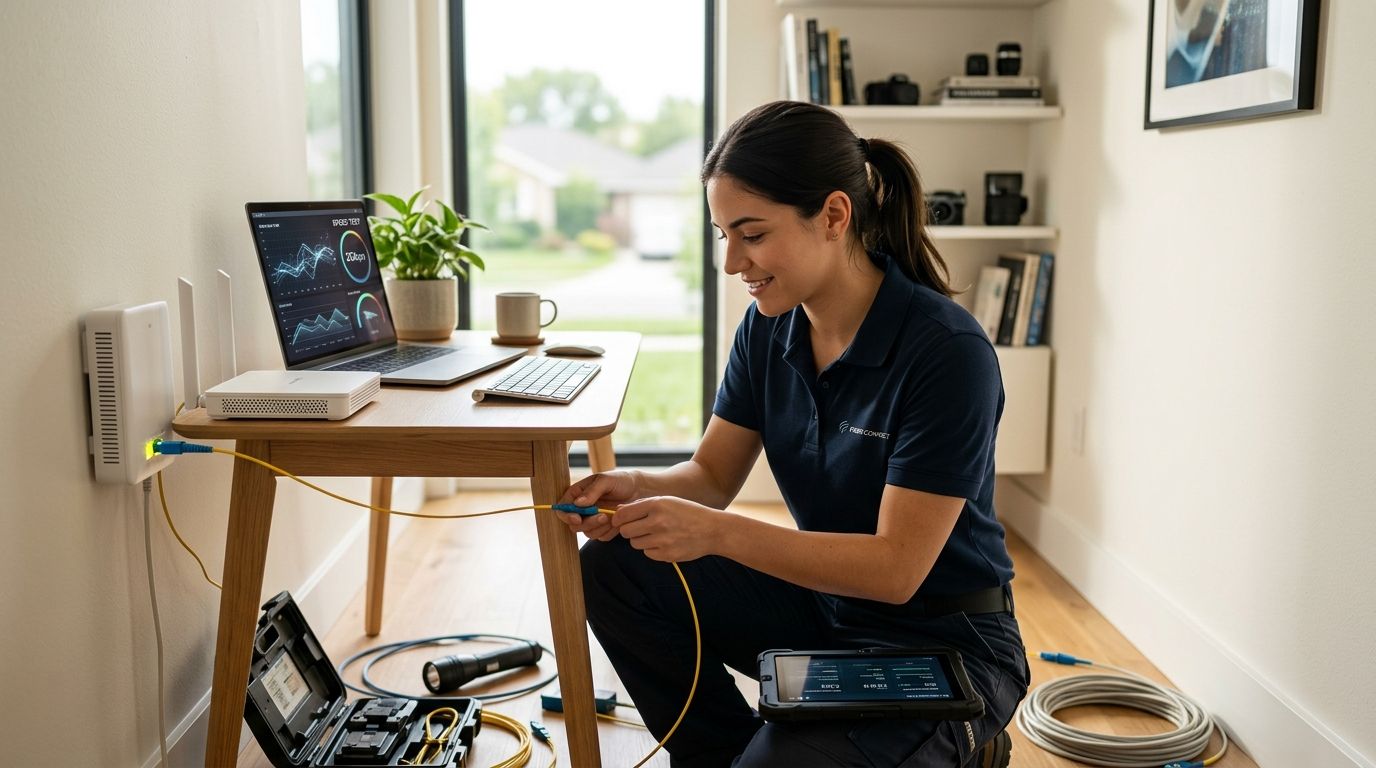
SumoFiber runs fiber internet into small and mid-sized towns across eight states, then wraps managed WiFi, TV, home phone, and mobile around that same connection. The pitch for rural households isn't the fastest number on a spec sheet — it's not juggling four different bills and four different support lines when something goes wrong.
SumoFiber pros:
- One provider for internet, WiFi, TV, phone, and mobile
- No contracts or data caps
- 24/7 human support, not a scripted bot queue
- Managed WiFi means one weak spot in the house isn't a mystery to solve alone
SumoFiber cons:
- Fiber build is limited to specific towns within Utah, Idaho, Montana, Colorado, California, Wisconsin, Illinois, and New York
- Not every address in those states has fiber yet — availability is street-by-street
- Plan and equipment details vary by location, so check the current options for your address before assuming a specific speed
Best for: rural households and small businesses that want one bill, one number to call, and a fiber connection instead of a workaround.
Verdict: Buy if SumoFiber serves your address — check availability for internet providers in Bozeman, Montana or internet providers in Idaho Falls if you're in either market.
2. Starlink satellite internet: best for zero wired infrastructure
Starlink beams a connection down from a constellation of low-earth-orbit satellites to a dish at the property, which means it doesn't care whether a fiber line or phone cable ever reached that address. For genuinely remote land — no cable, no DSL, no tower in range — it's often the only wired-equivalent option that exists.
Starlink pros:
- Works where no fiber, cable, or phone line has ever been run
- Self-install dish, no scheduled truck roll for most setups
- Coverage isn't tied to a specific state or town footprint
Starlink cons:
- Needs a clear view of the sky; heavy tree cover or a north-facing roofline can block it
- Latency runs higher than fiber, which matters for competitive gaming and some video call quality
- Support is call-center and app-based, not a local human relationship
Best for: off-grid or deep-rural properties with no wired infrastructure within miles.
Verdict: Buy if you've confirmed no fiber or cable option reaches the property; otherwise a wired connection will beat it on latency and consistency.
3. Fixed wireless internet: best for line-of-sight rural land near a tower
Fixed wireless works by pointing a small receiver dish at a transmission tower, often on a hill or grain silo, instead of digging a trench. Regional wireless internet service providers (WISPs) fill a lot of the map between fiber towns and satellite-only land.
Fixed wireless pros:
- Install is faster than trenching fiber to a rural address
- Decent speeds for typical browsing, streaming, and video calls when signal is strong
- Often available in valleys and farmland that fiber hasn't reached yet
Fixed wireless cons:
- Signal degrades quickly with distance, trees, or hills blocking line of sight
- Speeds are shared across everyone connected to the same tower
- Quality varies enormously by which regional provider serves the area
Best for: rural properties with a clear line of sight to a tower and no fiber build scheduled.
Verdict: Hold — test the actual signal at the specific address before committing, since performance swings block to block.
4. 5G home internet: best for strong cellular coverage without a fiber build
Carriers including T-Mobile and Verizon sell a home internet gateway that pulls a connection from the same cellular towers used for phones. It's an easy plug-in option in areas where cell signal is already strong but fiber crews haven't shown up.
5G home internet pros:
- No installation appointment for most setups — plug in the gateway and go
- Works well when local cellular signal is strong
- No dish or line-of-sight requirement like fixed wireless or satellite
5G home internet cons:
- Speeds fluctuate with network congestion, especially in the evening
- Coverage is genuinely spotty in mountain valleys and dense tree cover
- Data prioritization can drop behind phone traffic on the same tower during peak hours
Best for: rural addresses with strong existing cell coverage that want a fast, no-appointment setup.
Verdict: Hold — check actual signal strength at the address, not just the carrier's coverage map.
5. DSL over existing phone lines: best budget fallback
DSL rides on the same copper phone lines that have reached rural America for decades, which is exactly why it's still around in 2026: the infrastructure is already there. It's the slowest option on this list, but sometimes the only one that reaches a specific address at all.
DSL pros:
- Available almost anywhere a phone line already exists
- Typically no data caps
- Cheapest hardware to install since the line is already run
DSL cons:
- Speeds drop sharply the farther the home is from the phone company's central office
- Slowest option here for video calls, remote work, or a multi-device household
- Many telcos are phasing out DSL infrastructure in favor of fiber or wireless
Best for: rural addresses where fiber, wireless, and satellite are all unavailable or unreliable.
Verdict: Skip if any other option on this list reaches the address; Hold as a fallback if it doesn't.
How we ranked these
Each option was weighed against the same six criteria: peak-hour speed consistency, latency, weather resilience, human support, contract terms, and service bundling. SumoFiber ranks first specifically because it clears all six for the towns it serves — the other four options each trade away one or two of those criteria to solve a coverage problem SumoFiber's fiber build hasn't reached yet.
“A rural internet connection that works fine until the day it doesn't, and nobody picks up the phone, isn't rural internet — it's a rural liability.”
Check fiber availability at your address
See if SumoFiber's fiber network reaches your town in 2026.
Which rural internet provider should you choose?
If SumoFiber's fiber network reaches the address, it's the pick — one bill for internet, WiFi, TV, phone, and mobile, backed by 24/7 human support and no contracts or data caps. If it doesn't reach yet, work down the list by what's physically near the property: fixed wireless if there's a tower in line of sight, 5G home internet if cellular signal is strong, Starlink if nothing wired exists, and DSL as the last resort where even that fails.
FAQ
What's the best rural internet provider in 2026?
SumoFiber is the best option where its fiber network reaches, since it bundles internet with managed WiFi, TV, phone, and mobile under one provider with 24/7 human support. Outside its fiber footprint, fixed wireless, Starlink, 5G home internet, or DSL fill the gap depending on what infrastructure is near the address.
Is Starlink better than fixed wireless for rural areas?
Starlink is the better choice when no tower is within line of sight of the property, since it only needs a clear view of the sky. Fixed wireless usually wins on latency and consistency when a tower is nearby, because the signal doesn't have to travel to and from orbit.
Does SumoFiber serve my area?
SumoFiber builds fiber into towns across Utah, Idaho, Montana, Colorado, California, Wisconsin, Illinois, and New York, but coverage is street-by-street within those states. Checking the address directly is the only reliable way to confirm availability.
Can you get fiber internet in a rural town?
Yes, in towns where a fiber provider like SumoFiber has already run lines, rural fiber is available and performs the same as fiber in a city. The limiting factor is always whether the fiber build has physically reached that specific street.
What's the difference between fixed wireless and satellite internet?
Fixed wireless sends a signal from a ground-based tower to a receiver dish at the home, while satellite internet like Starlink sends it from orbit. Fixed wireless usually has lower latency when the tower is close; satellite works in places no tower reaches at all.
Is 5G home internet reliable in rural areas?
5G home internet is reliable where the local cellular signal is already strong, but it fluctuates with network congestion and drops off fast in mountain valleys or dense tree cover. Checking actual signal strength at the address matters more than the carrier's coverage map.
Do rural internet providers have data caps?
It varies by provider and technology — DSL and fiber options like SumoFiber commonly run without data caps, while some satellite and fixed wireless plans do cap usage. Checking the specific plan terms before signing up avoids surprises.
How do you get 24/7 support with a small internet provider?
Providers built around rural markets, including SumoFiber, tend to staff round-the-clock human support specifically because outages in small towns don't wait for business hours. Asking directly whether a provider offers 24/7 human support, not just a chatbot, is worth confirming before signing up.
One last thing
The technology on this list matters less than most people assume — the real gap between a good and bad rural internet experience in 2026 shows up during the outage, not the sign-up. A provider with a strong spec sheet and a call-center hold queue loses to a smaller provider that answers the phone at 9 p.m. during a storm.