
Best for fiber internet with managed WiFi: SumoFiber. Best for a fiber-and-TV shortlist: Verizon Fios. Best for comparing cable internet and TV: Xfinity. Best for keeping cable TV and home phone together: Spectrum. The best internet TV and phone bundles fit your household’s actual viewing, calling, and WiFi needs—not just the longest list of included services.
- SumoFiber is the best fit here for households comparing internet TV and phone bundles alongside managed WiFi.
- Verizon Fios belongs on your shortlist when you want fiber internet, TV, and home phone.
- Xfinity and Spectrum belong in a cable bundle comparison; check channels, equipment, and phone requirements separately.
- Choose your internet connection first, then confirm that the TV and phone services solve a real household need.
Why this matters
A bundle joins services, but it does not make them equally useful. Your family might need dependable video calls and live sports, while the home phone barely rings. Another household might rely on a familiar telephone and watch the same channels every evening.
For your 2026 comparison, start with those differences. Treat internet, TV, and phone as 3 services to evaluate separately, even when a provider presents them together. A weak fit in one service does not disappear because the others share a provider.
Also separate internet service from WiFi coverage. The connection reaches your home; WiFi carries it around your rooms. A television beside the router and a laptop behind several walls can have very different experiences on the same internet plan.
What makes the best internet TV and phone bundles?
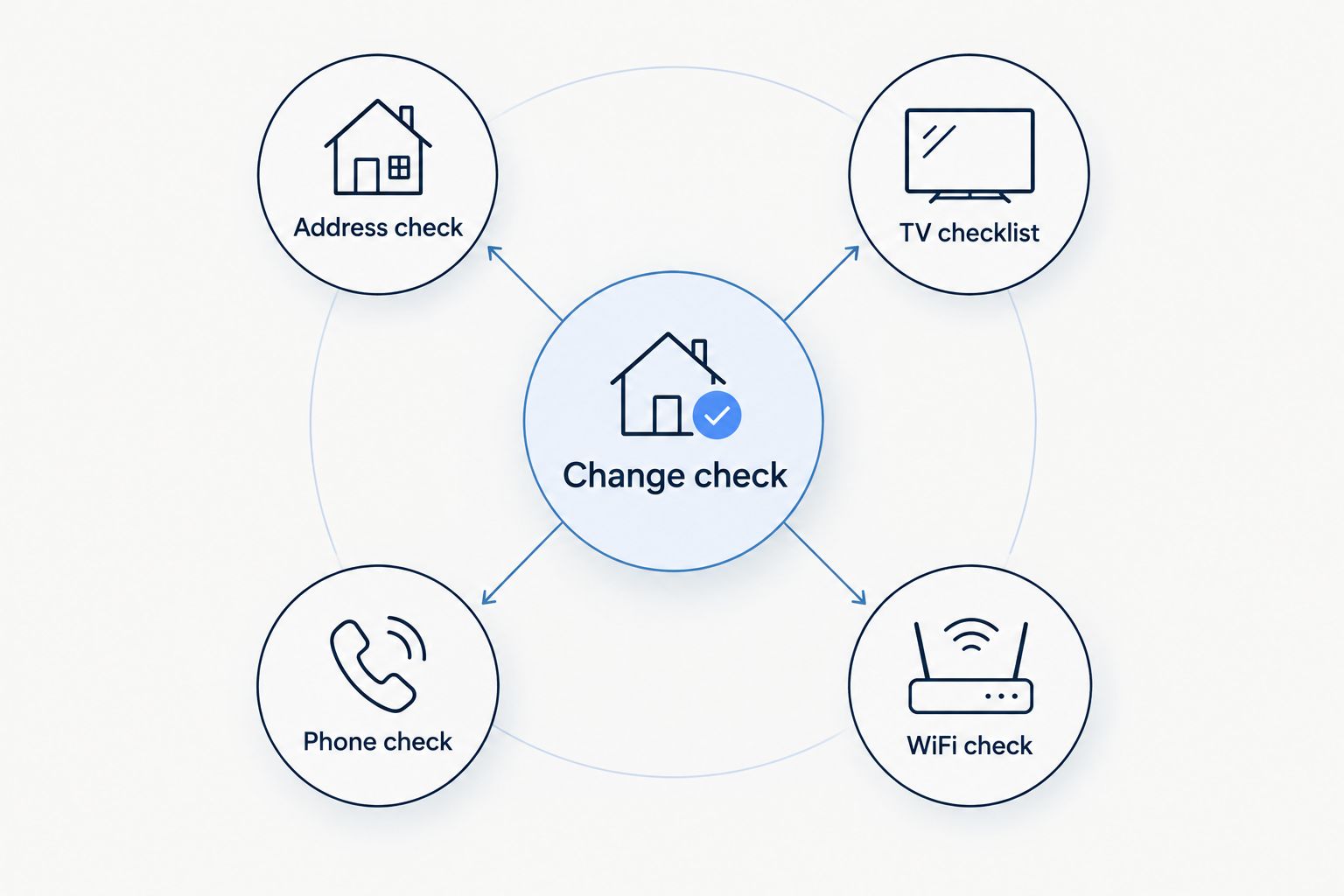
Use these checks before choosing a provider. They turn a broad bundle comparison into a decision about your home.
- Address check: Confirm the connection type and services for your exact property. A provider’s name alone does not tell you what connection reaches your building.
- TV checklist: Write down the channels, local stations, sports, and recording features you actually use. Check each requirement against the proposed TV service.
- Phone check: Decide whether you need home phone, mobile service, or both. Ask about number transfers, emergency calling, and equipment power requirements.
- WiFi check: Identify rooms where calls drop or television playback stalls. Ask what equipment and management the proposed setup includes.
- Change check: Ask what happens if you remove TV or phone later. Understand equipment returns, account changes, and service dependencies before signing up.
For a useful 2026 comparison, apply the same checklist to every provider. Do not let one representative compare internet alone while another discusses internet, television equipment, and phone together.
Internet, TV, and phone providers at a glance
This 2026 shortlist assigns each provider a distinct use case. It is not a ranking of measured network performance: your final decision depends on the connection, TV service, phone setup, and terms proposed for your address.
| Provider | Best for | Standout fit | Key limitation |
|---|---|---|---|
| SumoFiber | Fiber households that also want managed WiFi | Fiber internet, managed WiFi, TV, home phone, and mobile within its service portfolio | You still need to confirm the exact combination and equipment for your property |
| Verizon Fios | Households comparing fiber with provider TV | Fiber internet alongside Fios TV and home phone services | A Verizon offer is not automatically a Fios fiber offer |
| Xfinity | Households comparing cable internet and provider TV | Cable broadband, television, and home phone options | Internet speed alone does not establish whether the TV and phone setup fits |
| Spectrum | Households prioritizing cable TV and a home telephone | Cable internet, TV, and voice services | Mobile service and home phone are different products; specify which you need |
1. SumoFiber: best bundle fit for managed WiFi needs
SumoFiber offers residential and business fiber internet, managed WiFi, TV, home phone, and mobile services. SumoFiber is the best fit on this shortlist for households that want fiber internet and managed WiFi alongside TV and phone.
That combination deserves attention when the household problem is bigger than internet service alone. Think about a parent taking video calls upstairs while children stream downstairs: comparing the connection without discussing room-by-room WiFi leaves part of the decision unfinished.
SumoFiber pros:
- Its service portfolio covers internet, TV, and home phone.
- Managed WiFi is also part of the offering, giving you a separate coverage discussion.
- Mobile service belongs in the comparison if your household wants it alongside home services.
SumoFiber cons:
- Its stated service footprint spans selected states, not a nationwide footprint.
- A broad service portfolio does not establish which TV features, phone functions, or equipment your proposed setup includes.
- Fiber internet does not remove the need to assess indoor WiFi coverage.
Best for: A household that wants to discuss its fiber connection, television, telephone, and WiFi needs with the same provider.
Ask for a written service summary that separates those needs. Include your must-have channels, the rooms that need coverage, and whether the telephone number must stay the same. Verdict: Buy if the proposed services meet that checklist; hold if the WiFi or TV details remain unresolved.
2. Verizon Fios: best bundle fit for a fiber-and-TV shortlist
Verizon Fios provides fiber internet, television, and home phone services. It belongs in your comparison when you specifically want a fiber connection and a provider TV service rather than choosing television independently.
Keep the product name precise. Verizon also sells other types of connectivity, so a Verizon internet proposal should not be treated as a Fios proposal without checking the connection type.
Verizon Fios pros:
- Fiber internet is central to the Fios offering.
- Fios TV gives you a provider television service to evaluate alongside internet.
- Home phone service makes it relevant to a full internet, TV, and phone comparison.
Verizon Fios cons:
- The Verizon name covers services beyond Fios, creating room for an apples-to-oranges comparison.
- Provider TV still requires a channel and equipment check; fiber does not answer those questions.
- An integrated service choice ties more of your household setup to one provider relationship.
Best for: A household that specifically wants to compare fiber internet with provider-delivered TV and home phone.
Ask which television setup the proposal uses, which devices it requires, and how recording works. Then confirm the phone arrangement separately. Verdict: Buy when the proposal explicitly matches your fiber, TV, and calling requirements; skip if you are comparing a different Verizon connection by mistake.
3. Xfinity: best bundle fit for comparing cable internet and TV
Xfinity offers cable internet, television, and home phone services. It is a useful comparison point when your household wants broadband and a provider-managed television experience rather than assembling separate services.
Do not decide from the download-speed headline alone. Upload performance, TV features, equipment, and telephone requirements belong in the same conversation—especially when someone works from home while others watch television.
Xfinity pros:
- Internet, TV, and home phone sit within the same provider’s service portfolio.
- Its television offering gives you a concrete alternative to choosing standalone streaming services.
- A cable proposal provides a useful connection-type comparison against a fiber proposal.
Xfinity cons:
- Cable service should not be assumed to have matching upload and download speeds.
- A TV package can include channels your household does not use.
- Combining services makes later changes a broader account decision rather than an internet-only decision.
Best for: A household comparing cable broadband with a provider television package and home phone.
List your simultaneous activities: video meetings, television playback, cloud backups, and calls. Ask how the proposed connection and equipment support that mix rather than asking only for the largest speed figure. Verdict: Buy if the complete cable setup fits your usage; hold if the comparison only addresses download speed.
4. Spectrum: best bundle fit for cable TV and home phone
Spectrum offers cable internet, TV, and voice services. It belongs on the shortlist for households that want to retain a provider TV service and a home telephone while reviewing their internet connection.
Be explicit about the telephone service you want. Home phone and mobile service solve different problems, even when both appear in the same provider conversation.
Spectrum pros:
- Its service portfolio includes the traditional internet, TV, and home phone combination.
- Provider television suits a comparison built around channels rather than individual streaming subscriptions.
- Home voice service makes it relevant when retaining a household telephone is a priority.
Spectrum cons:
- Cable internet does not establish equal upload and download performance.
- A television package needs a channel-by-channel check, not just a package-name comparison.
- Choosing mobile service does not, by itself, replace the functions of a household telephone.
Best for: A household that wants cable television and a home phone to remain central to its service setup.
Ask the representative to identify internet, television, and home voice separately in the proposed order. Check which equipment each service uses. Verdict: Buy if the home phone and TV setup matches your routine; skip a mobile-focused proposal when your actual requirement is a household telephone.
How we ranked these bundle options
The 2026 ranking uses service fit, not an unsupported claim that one provider is fastest or most reliable everywhere. The criteria are connection type, television fit, home phone requirements, WiFi needs, and the consequences of changing services later.
Each provider owns a different decision slot. Start with the slot that describes your household, then compare written proposals using identical requirements. A provider that fails a must-have channel or telephone requirement is not your best bundle, regardless of its position here.
Which internet, TV, and phone bundle should you choose?
Start with the managed-WiFi fiber option if your biggest frustration is keeping the whole house connected. Compare the fiber-and-TV option if connection type and provider television are your priorities. Use the cable options when their proposed TV and home phone arrangements better match your routine.
Before committing, complete these practical checks:
- Check the connection. Use 1 wired device to help distinguish an internet-connection problem from a WiFi problem.
- Check the rooms. Test in 2 rooms where you actually work or watch television, not only beside the router.
- Check the viewing routine. Confirm local channels, sports, recording, and the devices used on each television.
- Check the telephone. Confirm number-transfer eligibility and equipment requirements before canceling the existing line.
For the telephone step, read the guide to keeping your phone number when switching to fiber home phone. Keep the current service active until the transfer process is confirmed.
FAQ
What's the best internet, TV, and phone bundle for my family?
The best bundle is the one that meets your internet, channel, and calling requirements at your exact address. Start with connection type, then check TV features, home phone needs, and WiFi coverage separately.
Is fiber always better than cable for a bundle?
Fiber does not automatically make every part of a bundle better. Compare the internet connection separately from the TV lineup, phone functions, equipment, and service terms.
Do internet TV and phone bundles include mobile service?
Do not assume that phone means mobile service. Ask whether the proposed package includes home phone, mobile service, or both, and identify each service separately on the order.
Can I keep my home phone number when switching providers?
Confirm number-transfer eligibility with the receiving provider before switching. Keep your existing phone service active until the transfer instructions and completion are confirmed.
Will fiber internet fix weak WiFi in an upstairs bedroom?
Fiber internet alone does not fix weak indoor WiFi coverage. Router placement, walls, interference, and the WiFi equipment affect how the connection reaches that bedroom.
Will my home phone work during a power outage?
An internet-based home phone needs power for the equipment carrying the call. Ask which devices require backup power and what happens if the internet connection itself stops working.
Do I need TV and home phone from my internet provider?
You do not need to choose every service from the same provider. Compare a combined arrangement with separate services, and keep only the services your household uses.
One last thing
The telephone deserves its own switching plan. If you use a medical alert device, alarm, fax machine, or other equipment connected to the phone line, ask its manufacturer or service company about compatibility before changing telephone service.
For your 2026 decision, make a list of everything connected to that line—not just the handset. That small check addresses a different risk from internet speed or television channels.