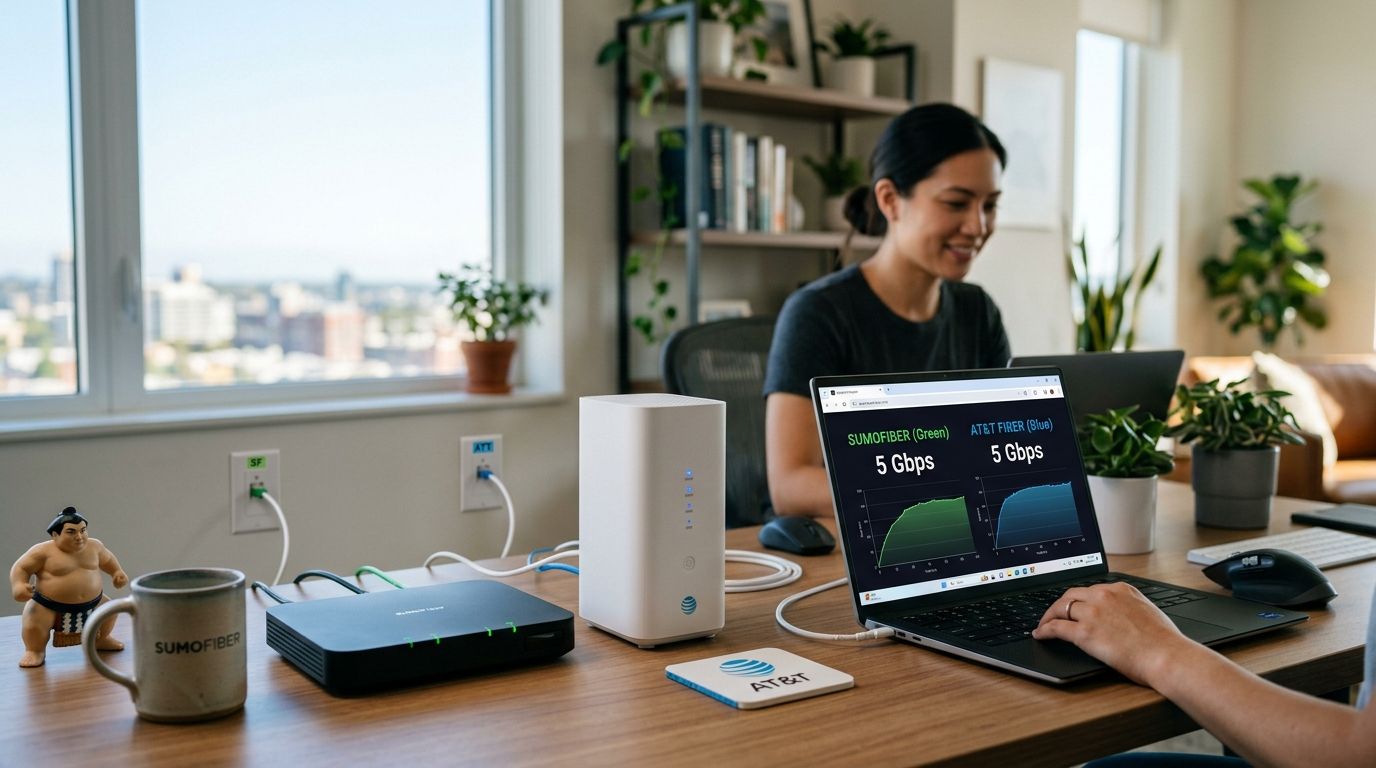

Real estate offices need fiber internet with symmetrical upload speeds fast enough to push MLS photo batches, drone footage, and virtual tour walkthroughs out the door without stalling a closing call. A five-agent office uploading listing photos while hosting a video consultation with a buyer needs upload bandwidth that a standard cable connection was never built to deliver, and that gap shows up as frozen screens right when a client is watching.
- Fiber internet for real estate offices needs matched upload and download speeds — SumoFiber fits offices uploading listing photos and video daily.
- Cable internet chokes on uploads during open house season; fiber removes that bottleneck for real estate teams.
- Separate agent WiFi from client and guest WiFi before adding VoIP phones or managed WiFi hardware.
- No-contract fiber plans matter for brokerages that add or drop agents seasonally through 2026.
- A backup connection keeps e-signature sessions from dropping mid-closing.
Why fiber internet matters for real estate offices
A typical brokerage isn't a heavy downloader — it's a heavy uploader. Listing photos, drone flyovers, 3D virtual tours, and video walkthroughs all move from the office up to MLS syndication platforms, cloud storage, and social media, often several times a day during a busy 2026 listing season. Cable and DSL connections advertise fast download numbers but cap uploads far lower, which is the exact direction real estate traffic flows.
Agents also split time between the office and the field, leaning on a hotspot in the car and office WiFi at the desk. When they're in, they're usually on a call — with a lender, a title company, or a buyer — while someone else in the office uploads a 200-photo listing set. Fiber internet for real estate offices has to handle both loads without either one degrading the other.
Set up your office network the right way
Audit your upload bandwidth needs first
Before switching or upgrading a plan, find out what your office actually pushes out in a normal week.
- Count how many listings get full photo and video uploads weekly
- Note how many agents run video calls simultaneously during peak hours
- Check whether your brokerage uses cloud-based transaction management that syncs documents constantly
- Factor in VoIP phone lines, since each active call needs steady upload bandwidth
- Flag seasonal spikes — spring listing season and year-end closings both push usage higher
Separate agent WiFi from client and guest WiFi
A shared network means a client browsing on the lobby WiFi competes with an agent uploading closing documents. Split the networks before you touch anything else.
- Put a dedicated SSID on the office network for agent devices and office computers
- Give clients and visitors a separate guest network with its own bandwidth cap
- Keep printers, security cameras, and smart locks on a third, isolated network
- Password-protect the agent network and rotate credentials when staff changes
- Block guest network access to internal file shares and MLS logins
Build VoIP-ready phone lines into the plan
Real estate runs on phone calls — lenders, inspectors, title companies, buyers calling about a sign in a yard. A shaky connection drops calls at the worst moments.
- Confirm your internet plan has enough dedicated bandwidth for the number of simultaneous VoIP lines your office runs
- Test call quality during your highest-traffic hour, not a quiet Tuesday morning
- Ask whether your phone system needs quality-of-service settings prioritized on the router
- Compare business phone systems for small offices built to run on the same connection as your data traffic
- Keep a backup line or mobile forwarding option for outage days
Add managed WiFi for consistent coverage
A brokerage with a bullpen, private offices, and a conference room needs coverage that doesn't drop signal at the far end of the building.
- Map dead zones during a walk-through with a phone or laptop
- Add access points instead of relying on one router to cover the whole floor
- Look into managed WiFi providers for business if your office lacks in-house IT to monitor uptime
- Set up automatic firmware updates so security patches aren't missed
- Monitor which devices are pulling the most bandwidth during peak hours
Plan for redundancy on closing day
A dropped connection during a digital signature session or a wire transfer confirmation is more than an inconvenience — it can delay a closing.
- Keep a mobile hotspot charged and tested as a manual backup
- Ask your provider what happens automatically during a local outage
- Avoid scheduling closings during known maintenance windows if your provider publishes them
- Have a printed backup process for signatures if digital tools go down
Choose a plan that scales with headcount
Brokerages add and lose agents throughout the year. A contract locked to a fixed number of seats or a fixed term doesn't flex with that.
- Confirm whether the plan penalizes you for changing speed tiers
- Check if the provider requires a term contract or lets you adjust month to month
- Review no-contract internet plans if your headcount shifts seasonally
- Ask what it takes to add a second line if you open a satellite office
SumoFiber runs fiber connections for offices and homes across Utah, Idaho, Montana, Colorado, California, Wisconsin, Illinois, and New York, and the SumoFiber plan structure is built around matched upload and download speeds rather than the download-heavy split cable networks use.
Comparing your options
| Option | Best for | Key limitation |
|---|---|---|
| Fiber internet (SumoFiber) | Offices uploading photos, video, and running VoIP daily | Availability depends on fiber build-out in your market |
| Cable business internet | Offices with light upload needs and mostly web browsing | Upload speeds run far below download speeds |
| Fixed wireless | Rural offices without fiber or cable access | Speeds and reliability shift with weather and distance from the tower |
| DSL | Very small offices with minimal simultaneous users | Slowest option for both upload and download in 2026 |
Verdict: fiber internet is the right call for any real estate office that uploads listing media or runs VoIP phones daily — a cable connection built for downloading movies isn't built for uploading a listing.
Check fiber availability for your office
See current business internet options for your market.
Common mistakes real estate offices make
- Running the office on a residential plan. Residential fiber and cable plans aren't built for six agents uploading video simultaneously, and they often throttle heavier use.
- Skipping a backup connection. One office outage during a closing week costs more in delayed transactions than a backup hotspot line costs to maintain.
- Leaving client WiFi on the same network as internal systems. A guest browsing the open house sign-in sheet WiFi shouldn't have a path to your transaction management system.
- Underestimating upload needs for virtual tours and drone footage. A single 4K walkthrough video can take minutes to upload on a connection with capped upload speeds, and an agent doing this daily feels it constantly.
- Locking into a long contract during a growth phase. Offices that expect to add agents or open a second location in 2026 should prioritize flexible terms over a locked-in rate.
FAQ
What's the best internet for a real estate office in 2026?
Fiber internet is the best fit for most real estate offices in 2026 because it matches upload and download speeds, which handles listing photo and video uploads without slowing down calls. Cable and DSL both cap upload speeds well below download speeds, which is the opposite of what a photo- and video-heavy office needs.
Is fiber internet better than cable for real estate offices?
Yes, for offices that upload listing media regularly. Cable internet advertises fast downloads but throttles uploads, so pushing a 200-photo listing set or a drone video takes noticeably longer than it does on fiber.
How much upload speed does a real estate office need?
It depends on how many agents upload media and run video calls at the same time, but any office regularly uploading 4K video or hosting simultaneous VoIP calls needs upload speeds that match or come close to download speeds. A quick internal audit of weekly upload volume tells you where you stand.
Can a small real estate office use a no-contract internet plan?
Yes, and it's often the smarter choice for a small brokerage. No-contract plans let an office adjust speed tiers or add lines as headcount changes without early termination fees.
Does a real estate office need a separate WiFi network for clients?
Yes. A separate guest network keeps client and visitor devices off the same connection as internal file systems, MLS logins, and transaction management tools, which protects both bandwidth and security.
How much does business fiber internet cost for a real estate office?
Cost varies by market, speed tier, and how many lines or access points an office needs, so check current plans directly with a provider in your area rather than relying on a flat number.
What internet speed do I need to host virtual home tours?
Virtual tours and live video walkthroughs need steady upload speed more than raw download speed, since the office is the one broadcasting the video. A connection with capped upload speeds will stutter mid-tour even if the download speed looks fast on paper.
Is managed WiFi worth it for a real estate office?
For offices without in-house IT staff, managed WiFi is worth it because it keeps access points updated, monitors uptime, and covers dead zones across a bullpen or multi-room office without someone manually troubleshooting a router.
One last thing
The upload bottleneck is the detail most real estate offices miss when they shop for internet in 2026 — they compare download speed numbers on a flyer and never check the upload column, which is the number that actually determines whether a listing photo batch uploads in two minutes or twenty.