
Your monthly mobile phone service cost is the total recurring bill for your lines, not just the advertised service charge. Phone payments, taxes, optional extras, and discount conditions can change what you actually pay. For a useful 2026 comparison, separate the cost of staying connected from the cost of buying a phone.
- How much does mobile phone service cost per month? Compare the full recurring bill, not the headline charge.
- Sumofiber offers mobile service alongside internet; compare both services separately before choosing a provider.
- Separate device payments, mobile data, taxes, and optional extras when reviewing a phone bill.
- Choose coverage and data terms that fit your routine before comparing bundles.
How much does mobile phone service cost per month?
Your monthly mobile bill equals service charges plus device payments, applicable taxes and fees, and selected extras, minus applicable credits. Keep those categories separate so you can compare offers fairly.
Sumofiber offers mobile service alongside residential and business internet. When comparing providers, request the complete recurring bill for your specific lines and phones rather than comparing service charges alone.
| Bill component | What to check | Why it matters |
|---|---|---|
| Mobile service | Charges for each line and its data allowance | This is the connectivity portion of your bill |
| Phone payments | Any device installment attached to each line | A phone purchase is separate from mobile service |
| Taxes and fees | Which charges are included and which are additional | The advertised service charge might not be the final bill |
| Optional extras | Insurance, hotspot additions, international features, or subscriptions you select | Extras change the total without necessarily changing basic service |
| Credits and discounts | Eligibility requirements and how long each credit applies | A conditional credit is not the same as an unconditional reduction |
Ask for the first bill and the normal recurring bill separately. Setup charges, partial billing periods, or the timing of credits can make those bills different.
Why this matters
A phone bill combines several decisions that deserve separate answers. You need a connection, you might need a new phone, and you might want protection or travel features. Combining everything into a single headline makes it harder to see which choice changes the bill.
The practical question is whether the plan fits your life. A parent using navigation and messaging has different needs from someone using a phone as a laptop hotspot. Neither should choose a plan based only on its name.
For your 2026 household budget, compare the same number of lines, the same phone arrangement, and the same features. Otherwise, you are comparing different purchases.
Which mobile service arrangement fits your routine?
Mobile plans differ in billing arrangements, data terms, and device options. The categories below overlap: you can bring your own phone to different kinds of service, and device financing does not define the underlying network.
| Arrangement | Best for | Main advantage | Main drawback or check |
|---|---|---|---|
| Prepaid service | People who prefer paying before using service | Separates the payment decision from a later recurring bill | Check renewal rules, data terms, and what happens when your allowance runs out |
| Postpaid service | People comfortable with a recurring billing account | Can put eligible lines and selected account features together | Check billing conditions, account requirements, and optional additions |
| Bring your own phone | People with a compatible phone they want to keep | Avoids adding a new device purchase to the comparison | Confirm compatibility and unlock status before switching |
| Service with device financing | People who need a replacement phone and want installment payments | Spreads an eligible device purchase across payments | The device obligation is separate from the service itself |
| Mobile alongside home internet | People comparing connectivity services from the same provider | Lets you assess both services with one provider in mind | Check each service independently and confirm any bundle conditions |
Choose the arrangement that fits your phone, coverage needs, and billing preferences—not the arrangement with the most extras. A plan that suits another household can still be a poor match for yours.
Bringing your own phone
Keeping your current phone removes a new device purchase from the decision. It does not remove the need to check compatibility, battery condition, or whether the phone is unlocked.
Ask the prospective provider to confirm the exact device before transferring service. A familiar phone is only useful if it works with the service you choose.
Buying a phone with your service
Treat the phone purchase and the mobile plan as separate commitments. Read the device installment terms, including what happens to any remaining balance or credits if you change service.
A smaller service charge does not automatically produce a smaller total bill when a device payment is attached. Compare the entire arrangement, then decide whether you need the replacement phone now.
Why monthly mobile phone costs vary
The bill changes when the services, devices, or account conditions change. These are the factors to check before accepting a quote:
- Lines: Confirm the household total and the charge associated with each line. Do not compare a per-line figure with another provider's full-account figure.
- Data terms: Check the included allowance, any reduced-speed conditions, and whether hotspot usage has separate rules.
- Devices: Separate a phone installment from the service charge, and check the remaining device obligation before switching.
- Extras: Review insurance, international features, subscriptions, and other additions individually.
- Taxes and fees: Ask which charges are included in the quoted bill and which depend on your billing location or selected services.
- Discount conditions: Check requirements tied to payment methods, account eligibility, other services, or continued device credits.
Coverage is another essential comparison, even though it is not a billing line. A plan that fails where you need it does not solve your communication needs.
Make your 2026 comparison around your actual routine: home, work, school, regular errands, and travel. Ask about those places rather than accepting a broad coverage description as the complete answer.
How do I compare mobile phone bills fairly?
Compare matching service arrangements and separate temporary charges from recurring ones. You do not need a complicated spreadsheet, but you do need the same categories for each provider.
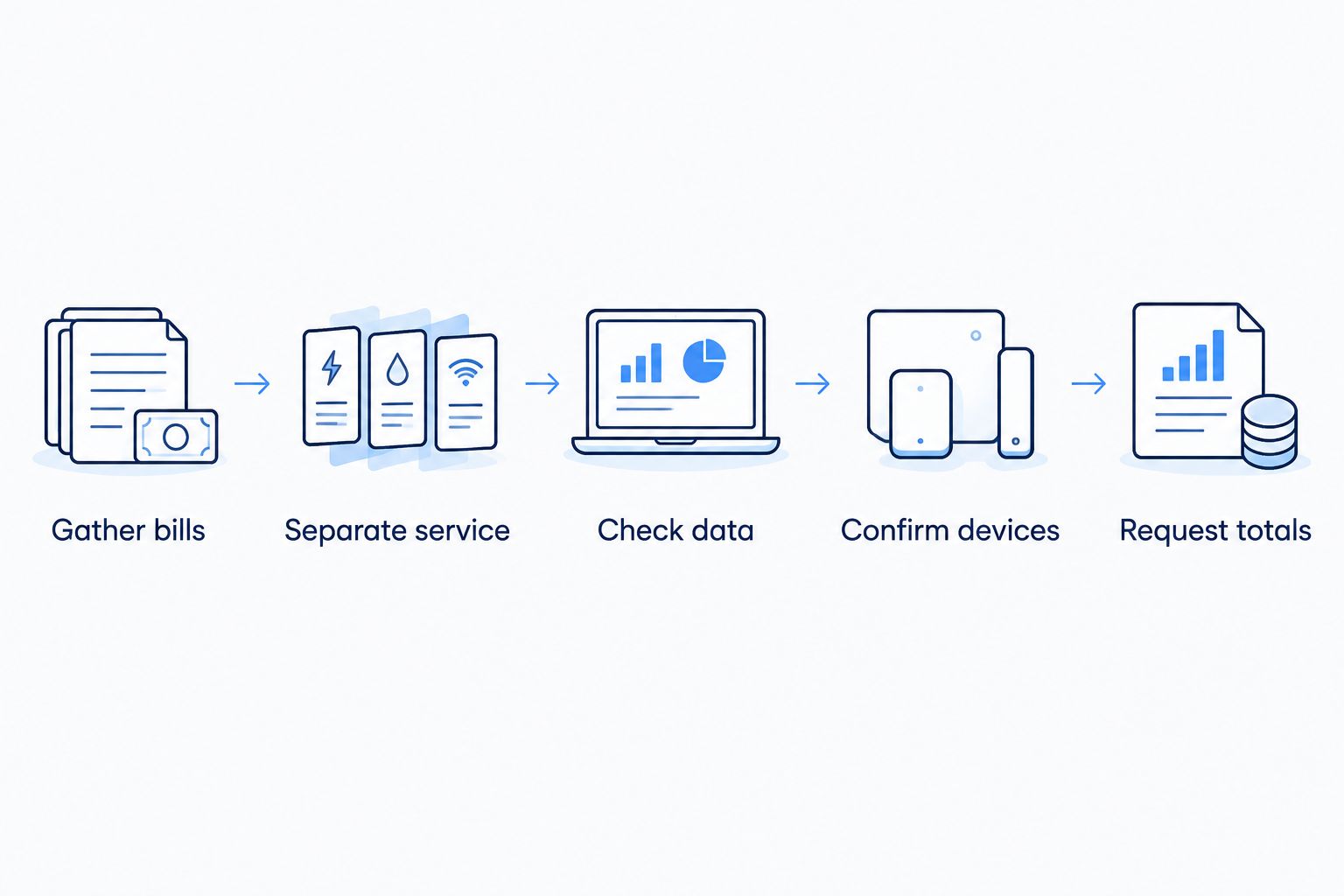
- Gather bills. Find your current statement and identify every active line, device payment, optional feature, and credit. Use the detailed statement rather than only the payment confirmation.
- Separate service. Record connectivity charges apart from phone purchases and extras. This shows whether a proposed change affects service, the device, or both.
- Check data. Review your cellular usage and any hotspot use. Compare those needs with the proposed plan's terms, including reduced-speed conditions.
- Confirm devices. Verify compatibility, unlock status, and any outstanding installment obligations. Do this before agreeing to transfer your number.
- Request totals. Ask for the first bill, the normal recurring bill, and the bill after conditional credits end. Request the assumptions behind each total in writing.
Finish by checking the changes that matter to you. If you plan to keep your phone, compare offers using that phone. If you need hotspot access for work, include it in every comparison rather than adding it after you choose.
This method also makes sales conversations shorter. You can ask about a specific billing category instead of asking whether the plan is generally cheaper.
Is unlimited mobile data the right choice for me?
Unlimited describes a plan's data offering, but it does not answer every question about how the service works. Read the terms for speed management, hotspot use, and international use separately.
Start with your current cellular usage. Time spent on home WiFi is different from time spent using mobile data, so a busy household does not automatically need the same mobile arrangement for every person.
Choose data terms that fit your use away from WiFi. Someone who regularly connects a laptop through a phone should check hotspot terms directly. Someone who mostly uses messaging and navigation should review actual usage before paying for features they do not need.
For a 2026 plan review, also consider changes in your routine. A new commute, a job requiring travel, or a child getting a phone can change what you need without making every premium feature useful.
Is mobile service cheaper when bundled with home internet?
A bundle is not automatically cheaper than buying services separately. Compare the combined recurring bill, the requirements attached to each service, and what happens if you later cancel either one.
The guide to mobile phone service bundled with home internet covers the relationship between those services. Use that distinction when reviewing a household offer: home internet and mobile service serve different purposes, even when the provider is the same.
Sumofiber mobile service is worth considering for households that want to compare internet and mobile services from the same provider. Sumofiber also offers managed WiFi, TV, and home phone service; that service range does not establish a particular mobile bill or bundle saving.
The advantage is having another provider to evaluate across your household's connectivity needs. The limit is equally clear: the provider's service range alone does not tell you whether its mobile terms fit your phone, travel, data use, or budget.
Before accepting any combined arrangement, ask:
- Can you keep each service independently?
- Does changing home internet alter the mobile bill?
- Are quoted credits conditional on keeping other services?
- Which account handles billing questions for each service?
- Does the mobile arrangement meet your needs without relying on a bundle benefit?
Can I lower my mobile bill without changing providers?
Review unused additions, device payments, and data needs before switching. You can ask your current provider to explain each recurring charge and show which current arrangements fit your usage.
Do not remove a feature solely because you have not used it recently. Check what it does first, especially insurance, international calling, or hotspot access you rely on occasionally.
A useful review ends with a clear decision for each item: keep it because you need it, remove it because you do not, or investigate it because the terms are unclear. Keep a written record of requested changes and check the next statement.
What should I check before switching mobile providers?
Confirm your phone, number transfer requirements, and existing account obligations before starting the switch. A service change does not erase an outstanding device agreement.
Ask the new provider how to transfer your number and when to make changes to your old account. Do not cancel the line you want to transfer before confirming the transfer process.
Also check the proposed service where you use your phone. Your kitchen, workplace, and usual travel routes matter more than a general description of nationwide coverage.
For a 2026 switch, keep the written offer and its conditions together. That gives you a reference when the first bill arrives and makes discrepancies easier to explain.
FAQ
How much does mobile phone service cost per month in 2026?
Your monthly mobile phone cost is the complete recurring bill for service, device payments, applicable taxes and fees, and selected extras, minus applicable credits. Request a written total for your exact lines and phones rather than comparing advertised service charges alone.
Does my monthly phone bill include the phone itself?
Your monthly bill includes the phone itself only when a device payment is part of your arrangement. Check the statement for a separate installment charge and distinguish it from mobile service.
Is prepaid mobile service better than postpaid?
Prepaid is best for people who prefer paying before using service; postpaid fits people comfortable with a recurring billing account. Compare coverage, data terms, renewal conditions, and account requirements before choosing.
Can I save by keeping my current phone?
Keeping a compatible phone avoids adding a new device purchase to your comparison. Confirm compatibility and unlock status, and check whether you still owe payments on the phone.
Does unlimited mobile data include unlimited hotspot use?
An unlimited mobile data label does not establish unlimited hotspot use. Read the hotspot allowance and reduced-speed terms separately before using your phone as a laptop connection.
Is bundling mobile service with home internet always cheaper?
Bundling mobile service with home internet is not automatically cheaper. Compare the combined recurring bill and confirm how canceling either service affects any conditional benefits.
Why is my first mobile phone bill different from later bills?
A first mobile bill can differ because of setup charges, partial billing periods, or credit timing. Ask the provider to separate initial charges from the normal recurring bill before you sign up.
What should I ask a mobile provider before signing up?
Ask for the complete recurring bill, device compatibility, coverage details, data and hotspot terms, and all credit conditions. Also request the first-bill total and the terms that apply if you leave.
One last thing
The clearest comparison separates what you use from what you own. Mobile service keeps your phone connected; a device installment pays for the phone. Changing one does not necessarily change the other.
Before making your final 2026 decision, ask for a written breakdown you can understand without a sales explanation. If a charge or credit remains unclear, resolve it before transferring service—not when the bill arrives.