
Business internet does not have one flat monthly number attached to it in 2026 — the bill moves with the bandwidth tier you pick, the length of the contract, and whether phone, managed WiFi, or TV ride along on the same account. A provider that quotes you a single figure before asking what you actually run on the connection is guessing, not pricing.
- How much does business internet cost per month in 2026 depends on speed tier, contract length, and bundled services, not a fixed number.
- A two-person office needs far less bandwidth than a clinic pushing imaging files or a restaurant running POS and guest WiFi together.
- Month-to-month plans without data caps, like SumoFiber's, avoid the early-termination fees that inflate multi-year business contracts.
- Bundling internet with managed WiFi, phone, and TV under one provider typically costs less than paying four separate vendors.
Why this matters
Most small businesses shop business internet the same way they shop home internet: look at a number on a website, pick the cheapest one, sign. That backfires because business accounts carry extra line items home plans don't — static IPs, uptime guarantees, dedicated support lines — and a contract with an early-termination fee locks in the wrong tier for two or three years.
The smarter move is pricing the account around what the business actually pushes through the connection: point-of-sale traffic, video calls, cloud backups, guest WiFi, or a VoIP phone system. Get that right first and the monthly number stops being a mystery.
How much does business internet cost per month?
The number on your invoice is built from four moving pieces, not one. Here's what pushes it up or down:
| Factor | Keeps cost lower | Pushes cost higher |
|---|---|---|
| Speed tier | 100–200 Mbps for a small office | 1 Gbps or more for call centers, clinics, multi-location retail |
| Contract terms | Month-to-month, no lock-in | Multi-year contract with early-termination fees |
| Bundled services | Internet only | Internet + managed WiFi + phone + TV under one provider |
| Static IP / SLA | Shared, dynamic IP | Dedicated static IP with a guaranteed uptime commitment |
Before you compare a single provider's rate, check how the field stacks up on business internet providers ranked by price — the spread between providers at the same speed tier is usually bigger than people expect.
100–200 Mbps: enough for a small office
A two-to-five-person office running email, video calls, and cloud file sync rarely needs more than this tier. Best for: solo practices, small retail counters, professional offices without heavy file transfer. Skip this tier if the business runs a point-of-sale system alongside guest WiFi — that combination eats bandwidth faster than owners expect.
500 Mbps–1 Gbps: where most growing businesses land
This is the range that covers a restaurant running POS, kitchen tablets, and guest WiFi at once, or a real estate office uploading large listing photos and video walkthroughs all day. Best for: businesses juggling multiple connected devices and cloud tools simultaneously. See how bandwidth needs actually scale on how much bandwidth a small business needs before locking in a tier.
1 Gbps and above: multi-location or video-heavy operations
Medical and dental offices moving imaging files, auto dealerships syncing inventory across lots, and any business running its own VoIP phone system on top of internet traffic need this tier. Best for: multi-location operations, clinics, and businesses that can't afford a dropped call mid-transaction. Anything less on these use cases is a wait — the connection will bottleneck before the contract term is up.
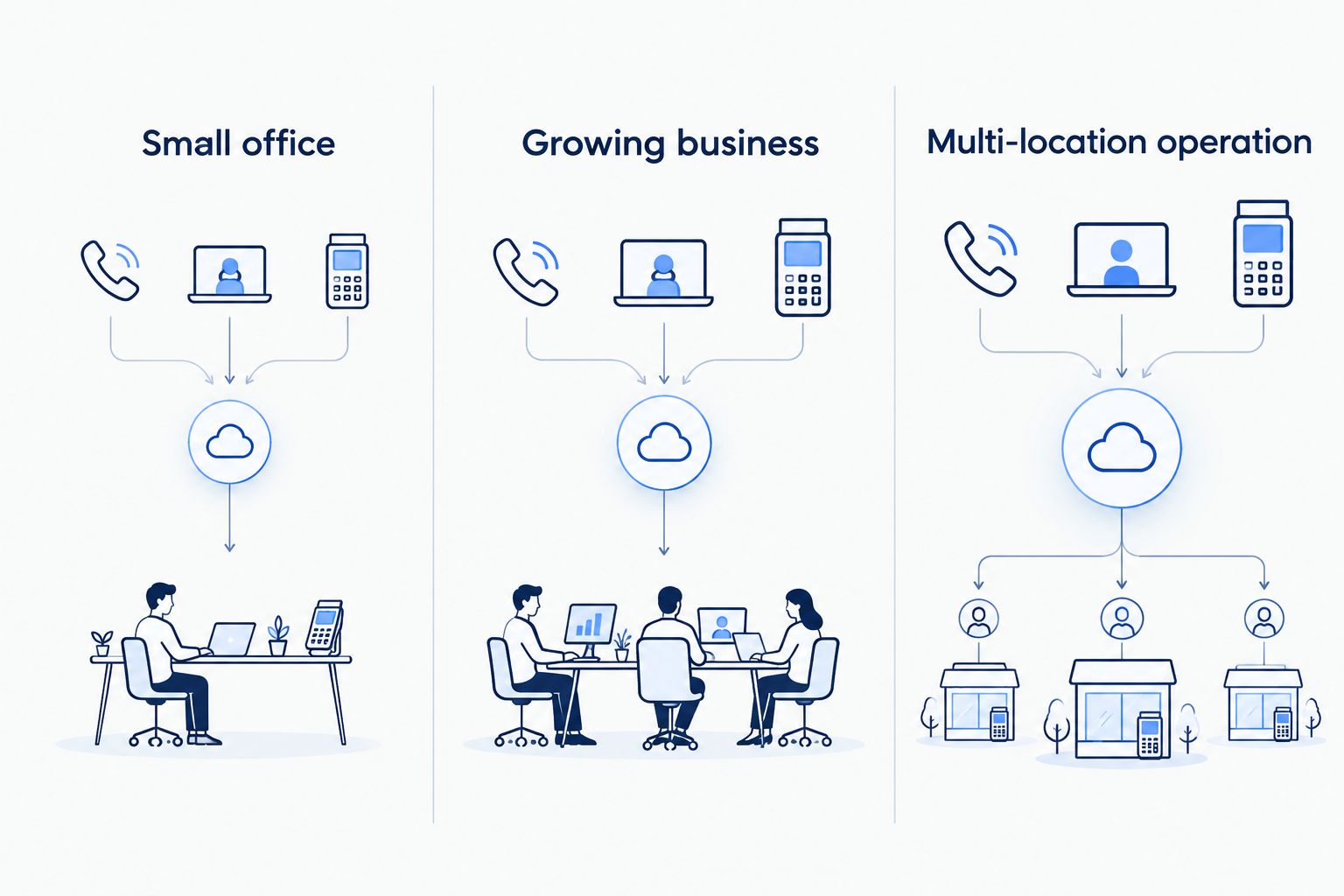
Why business internet cost varies
- Speed tier chosen — a jump from 100 Mbps to 1 Gbps changes the account tier the provider bills against
- Contract length — month-to-month plans avoid early-termination fees baked into multi-year deals
- Bundled services — combining internet with managed WiFi, phone, and TV under one provider consolidates billing instead of stacking four vendor invoices
- Static IP and SLA requirements — a dedicated IP and a guaranteed uptime commitment cost more than shared, best-effort service
- Installation and site readiness — a location with existing fiber drops installs faster and cheaper than a site needing new line runs
- Data caps and overage policies — providers that impose caps charge extra when a business exceeds them; providers without caps, like SumoFiber, remove that variable entirely
“A provider that quotes one flat number before asking what you run on the connection is guessing, not pricing.”
Is business internet more expensive than home internet?
Generally yes, because business plans carry service-level commitments — dedicated support lines, static IPs, and uptime guarantees — that residential plans don't include. The gap narrows for businesses that only need the same speed tier a household would use, but the support and reliability layer is what separates the two categories, not just the bandwidth number.
Does bundling phone and WiFi lower the monthly bill?
Bundling internet with managed WiFi, phone, and TV under a single provider typically costs less than paying separate vendors for each, since one account absorbs the billing and support overhead instead of four. It also means one call resolves an outage instead of three different support lines pointing fingers at each other. Compare setups on best business phone systems for small offices if phone is the piece you're evaluating.
Do fiber providers charge installation fees for business accounts?
Installation costs vary by provider and by how ready the site already is for fiber — a location with an existing drop installs faster than one needing new line runs from the street. Ask for a written installation quote before signing anything, since this line item is where multi-year contracts often bury extra cost.
Compare business internet plans
See speed tiers and bundled options for your location.
FAQ
How much does business internet cost per month in 2026?
The monthly cost depends on speed tier, contract length, and whether phone or WiFi management are bundled in, not a single fixed number. Check current business internet providers ranked by price for a real comparison at your address.
What internet speed does a small business actually need?
Most small offices run fine on 100-200 Mbps, while businesses running POS systems, guest WiFi, or video-heavy work usually need 500 Mbps to 1 Gbps. Multi-location or imaging-heavy operations often need 1 Gbps or more.
Is fiber internet worth the extra cost over cable for a business?
Fiber typically delivers more consistent upload speeds and lower latency than cable, which matters for cloud backups, VoIP calls, and card transactions. See the full comparison on whether business fiber is worth the extra cost over cable.
Do business internet plans include data caps?
Some providers cap data and charge overage fees once a business exceeds it, while others, including SumoFiber, run without data caps. Ask any provider directly before signing since this detail rarely appears on the advertised rate.
Does a multi-year contract lower the monthly rate?
Multi-year contracts sometimes lower the advertised monthly rate but add early-termination fees if the business outgrows the tier or relocates. A month-to-month plan costs more flexibility to gain but avoids that penalty entirely.
Can a business bundle internet, phone, and TV with one provider?
Yes, bundling internet with managed WiFi, phone, and TV under one provider consolidates billing and support instead of managing four separate vendor accounts. It also means a single support call resolves most connectivity issues.
How long does business fiber installation take?
Installation timelines depend on whether fiber already runs to the site or new line drops are needed. Sites with existing fiber infrastructure typically install faster than new-construction or rural locations.
Does a static IP address cost more for business internet?
A dedicated static IP typically adds to the monthly cost compared to a shared, dynamic IP, since it requires reserved infrastructure from the provider. Businesses running hosted servers or remote access setups usually need one regardless of the extra line item.
One last thing
The fastest way to overpay for business internet in 2026 isn't picking the wrong speed tier — it's signing a multi-year contract for a data cap you never asked about. SumoFiber runs its business accounts month-to-month with no contracts and no data caps, which means the number on the invoice doesn't move because a busy month pushed past a limit nobody mentioned at signing.