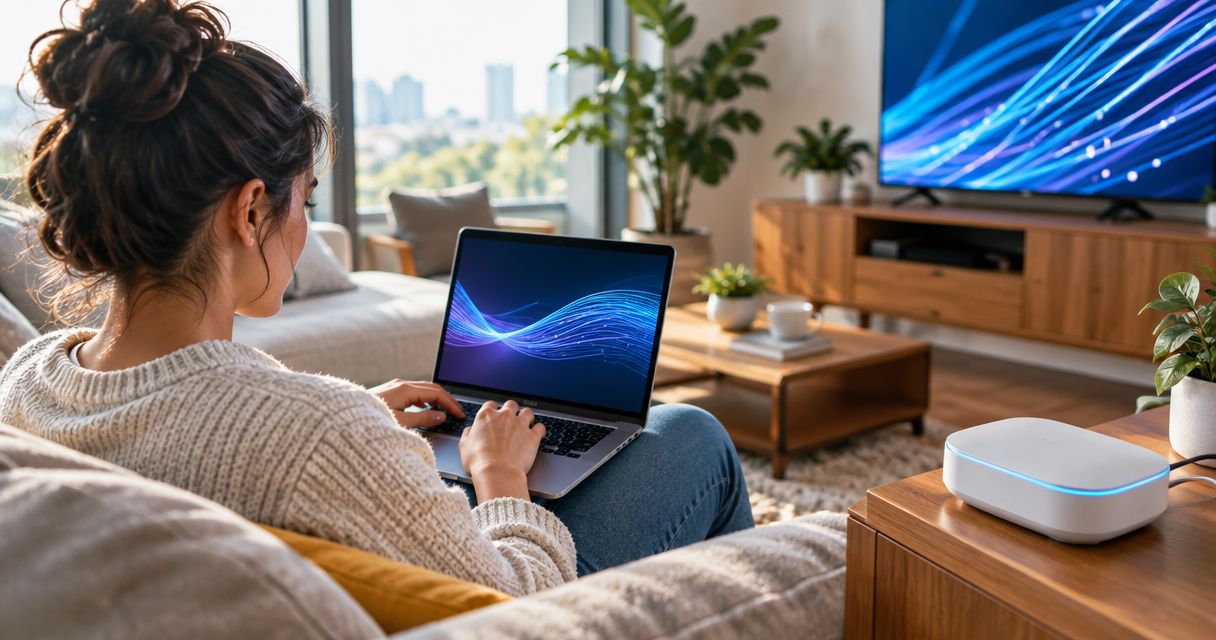
Fiber internet is worth it in 2026 for almost anyone who can actually get it — the real question isn't whether fiber is good, it's whether a fiber network reaches your address and whether your household or business needs the steady, two-way speed it delivers. The catch most comparison sites skip: fiber's biggest advantage isn't top download speed, it's upload speed and consistency, which matter more than headline numbers once you're on video calls, backing up files, or running a business office on one connection.
- Fiber internet is worth it in 2026 for households with several connected devices, remote work, or gaming needs.
- Fiber delivers symmetrical upload and download speeds; cable and DSL do not.
- SumoFiber runs fiber internet, managed WiFi, TV, phone, and mobile service across Utah, Idaho, Montana, Colorado, California, Wisconsin, Illinois, and New York.
- Availability, not value, is the real barrier — check whether fiber actually reaches your address before comparing plans.
Why this matters
Most internet comparisons focus on the biggest download number a provider will print. That number rarely reflects what happens in a real household in 2026: someone on a video call, a kid streaming in 4K, a smart TV running in the background, and a laptop syncing files to the cloud, all at once.
Fiber internet is built around a different premise — the line can carry the same speed both ways, so uploading a file doesn't slow down someone else's stream. That's the part worth understanding before you decide whether the switch is worth it for you. SumoFiber builds and runs fiber internet networks with that exact tradeoff in mind, alongside managed WiFi, TV, phone, and mobile service in the same markets.
Is fiber internet worth it in 2026?
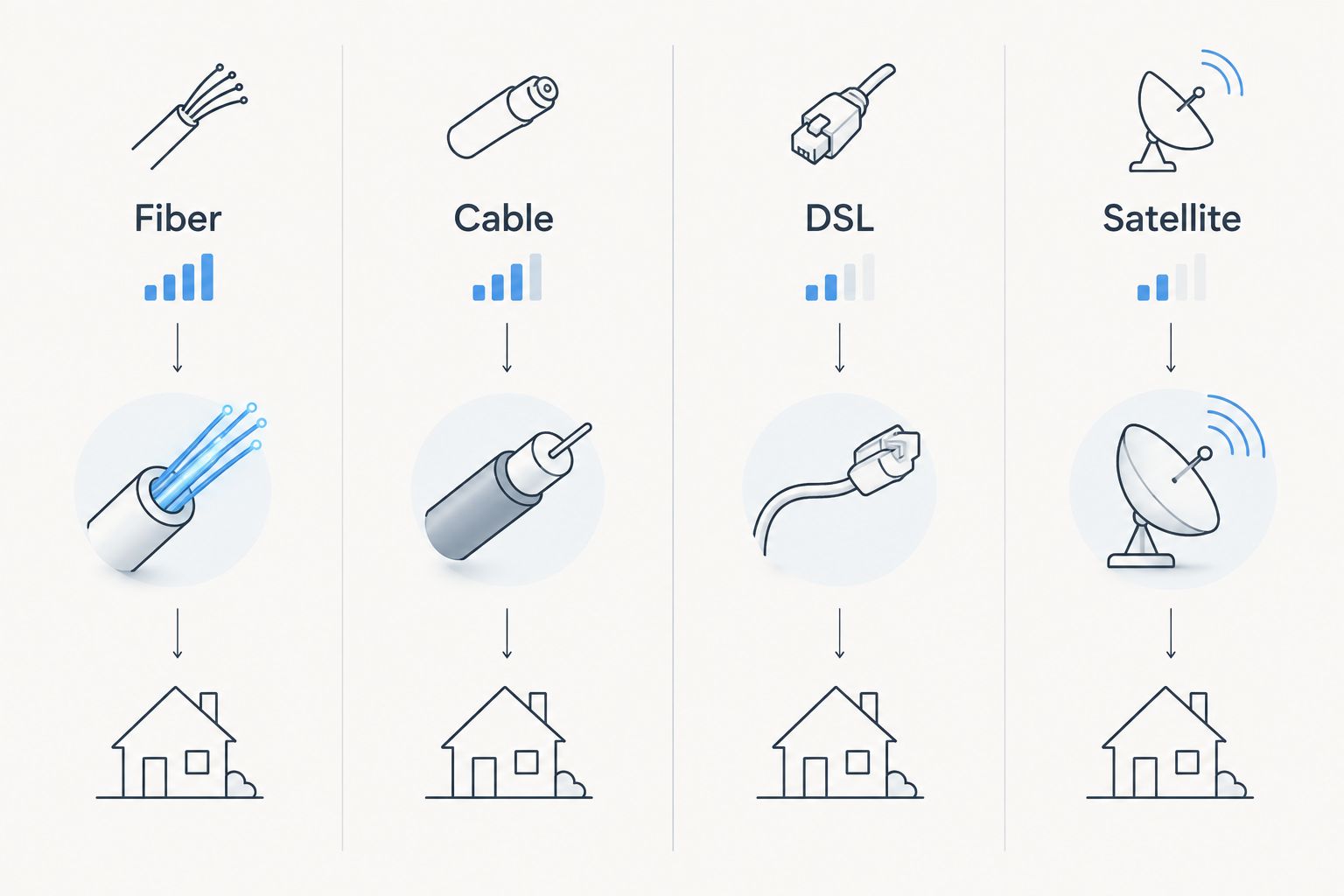
Compared to cable, DSL, and satellite, fiber wins on the two things that actually affect daily use: upload speed and consistency under load. Here's how the connection types stack up on the traits that matter, not just the download number on the box.
| Connection type | Upload speed | Reliability | Best for |
|---|---|---|---|
| Fiber | Matches download speed | Signal doesn't degrade with distance or weather the way copper does | Video calls, cloud backup, multiple heavy users at once |
| Cable | Much slower than download | Can slow during neighborhood peak hours when many households share a line | Casual browsing, single-stream video |
| DSL | Slower than cable | Degrades the farther you are from the provider's hub | Light use, backup connections |
| Satellite | Slowest, with the highest latency | Weather-sensitive | Areas with no wired option available |
The verdict: fiber internet is worth it in 2026 for anyone who can get it and uses more than one device at a time — the symmetrical speed is the feature, not the marketing line.
Fiber internet for gaming and streaming: worth it?
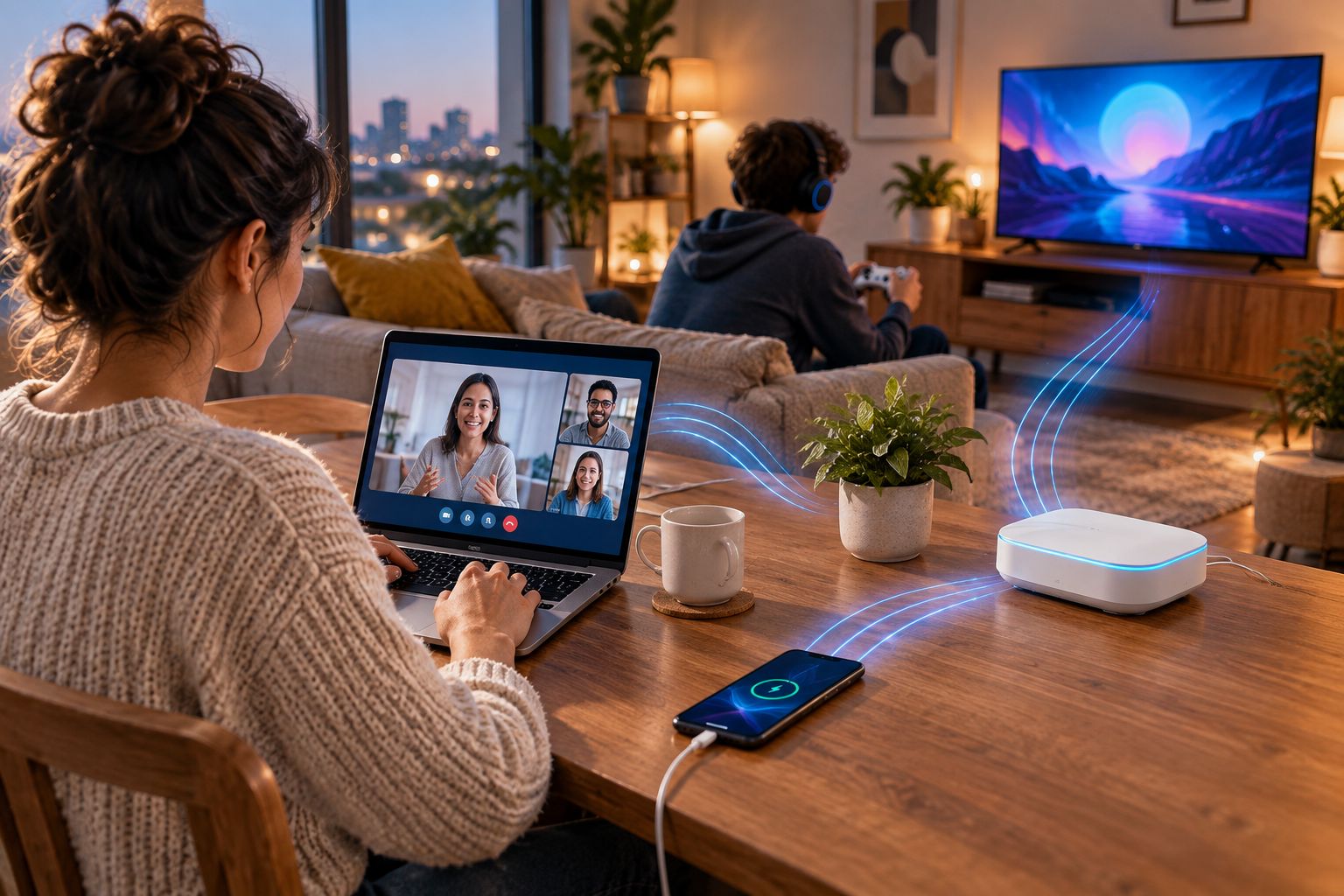
Gaming and streaming both punish inconsistent connections more than they punish a low top speed. A dip in upload speed during a match causes lag; a household streaming on three screens while someone games needs a connection that doesn't choke when all three demands hit at once.
- Fiber: handles simultaneous streaming and gaming without one activity stealing bandwidth from another. Buy.
- Cable: works fine for a single stream or a single gamer, but strains when both happen at once during peak hours. Hold.
- DSL: struggles with modern game downloads and 4K streaming together. Skip if you have more than one heavy user in the house.
SumoFiber's fiber internet plans are built around this exact scenario — a full household streaming, gaming, and working without one activity dragging down the rest. For a side-by-side look at providers built for this use case, see best internet providers for gaming.
Fiber internet for remote work: worth it?
Remote work leans hardest on upload speed — video calls, file syncs, and cloud-based tools all send data out, not just pull it in. A connection with weak upload speed makes video calls choppy even when download speed looks fine on a speed test.
Fiber internet is worth it for remote work in 2026 if you're on video calls daily, share large files, or run a home office alongside other household internet use. Cable can work for occasional remote work, but it's the first thing that suffers when a partner starts streaming or a kid logs onto a game console mid-call. See how providers compare for this specific need at best internet providers for remote work.
Fiber internet for small business: worth it?
A small office running point-of-sale systems, guest WiFi, and phone service off one connection needs the same symmetrical advantage a household gaming setup needs, just with more devices and less room for downtime. Fiber's steadier connection reduces the odds that a busy Friday afternoon knocks out card payments or phone calls.
SumoFiber offers business internet alongside managed WiFi and phone systems, which matters more for a small office than raw speed alone — one provider handling internet, WiFi, and phone means one call to fix a problem instead of three.
Why fiber's value varies
Fiber isn't a flat yes for every address or every household. What actually swings the value one way or another:
- Availability at your address — fiber networks are still expanding and don't reach every street yet
- Number of connected devices — a single-person household with light use won't feel the same difference a family of five will
- Work-from-home or video call frequency — upload speed matters more the more you rely on it
- Existing alternatives in your area — if cable in your neighborhood already performs well, the jump matters less
- Contract terms — a no-contract fiber plan lowers the risk of trying it
- Bundled needs — if you also need managed WiFi, TV, or phone service, one provider covering all of it changes the math versus stitching together separate vendors
See if fiber reaches your address
Check SumoFiber availability and current plans for your home or business.
Is fiber internet better than cable in 2026?
Fiber internet is better than cable in 2026 for anyone who uploads files, works from home, or has more than one heavy internet user in the house, because fiber's upload speed matches its download speed while cable's doesn't. Cable still holds up fine for single-user, light-use households where price and availability matter more than symmetrical speed.
Is fiber internet worth it if I only browse and stream occasionally?
Fiber internet is still worth it even for light use, mainly because it removes the slowdowns that show up during a neighborhood's peak evening hours on cable. If your use is genuinely light and infrequent, though, the upgrade matters less and a cheaper cable or DSL plan may cover your needs fine.
Is fiber internet worth it for a small apartment?
Fiber internet is worth it for apartments when the building has it wired in, since it removes the shared-bandwidth slowdown that can hit cable connections in multi-unit buildings during peak hours. Renters comparing options for apartment buildings can check fiber internet for apartment complexes for what to look for before signing a lease.
FAQ
Is fiber internet worth it for gaming?
Fiber internet is worth it for gaming because its symmetrical upload speed reduces lag during online matches, even when other devices in the house are streaming at the same time.
Is fiber internet worth switching from cable?
Switching from cable to fiber is worth it if you work from home, have multiple heavy users, or notice cable slowing down during evening peak hours. Light, single-user households will notice less of a difference.
Does fiber internet cost more than cable?
Fiber and cable pricing both vary by provider and region in 2026, and fiber plans are increasingly competitive with cable rather than automatically more expensive. Check current plans directly with a provider like SumoFiber rather than assuming fiber costs more.
Is fiber internet available everywhere in 2026?
Fiber internet is not available everywhere in 2026 — networks are still expanding, and availability depends on whether a provider has built fiber lines to your specific address.
Do I need fiber internet to work from home?
You don't strictly need fiber internet to work from home, but its symmetrical upload speed makes video calls and file syncing noticeably steadier than cable or DSL under the same conditions.
Can I get fiber internet without a contract?
Some fiber providers, including SumoFiber, offer no-contract plans, which lowers the risk of trying fiber without committing long term. Contract terms vary by provider, so confirm before signing up.
Is fiber internet worth it for a home with a lot of smart devices?
Fiber internet is worth it for smart-home-heavy households because it handles many simultaneous low-bandwidth connections without the slowdown that can hit shared cable lines.
One last thing
One physical fact explains a lot of fiber's reliability edge: fiber cables carry data as pulses of light instead of electrical current, so they're not vulnerable to the electromagnetic interference that can degrade copper cable or DSL lines during storms or near heavy machinery. That's the quiet reason fiber connections tend to hold steady when cable and DSL start to stutter.
If you're still deciding, the practical move is simple: check whether fiber reaches your address before comparing anything else — value only matters once availability is confirmed.