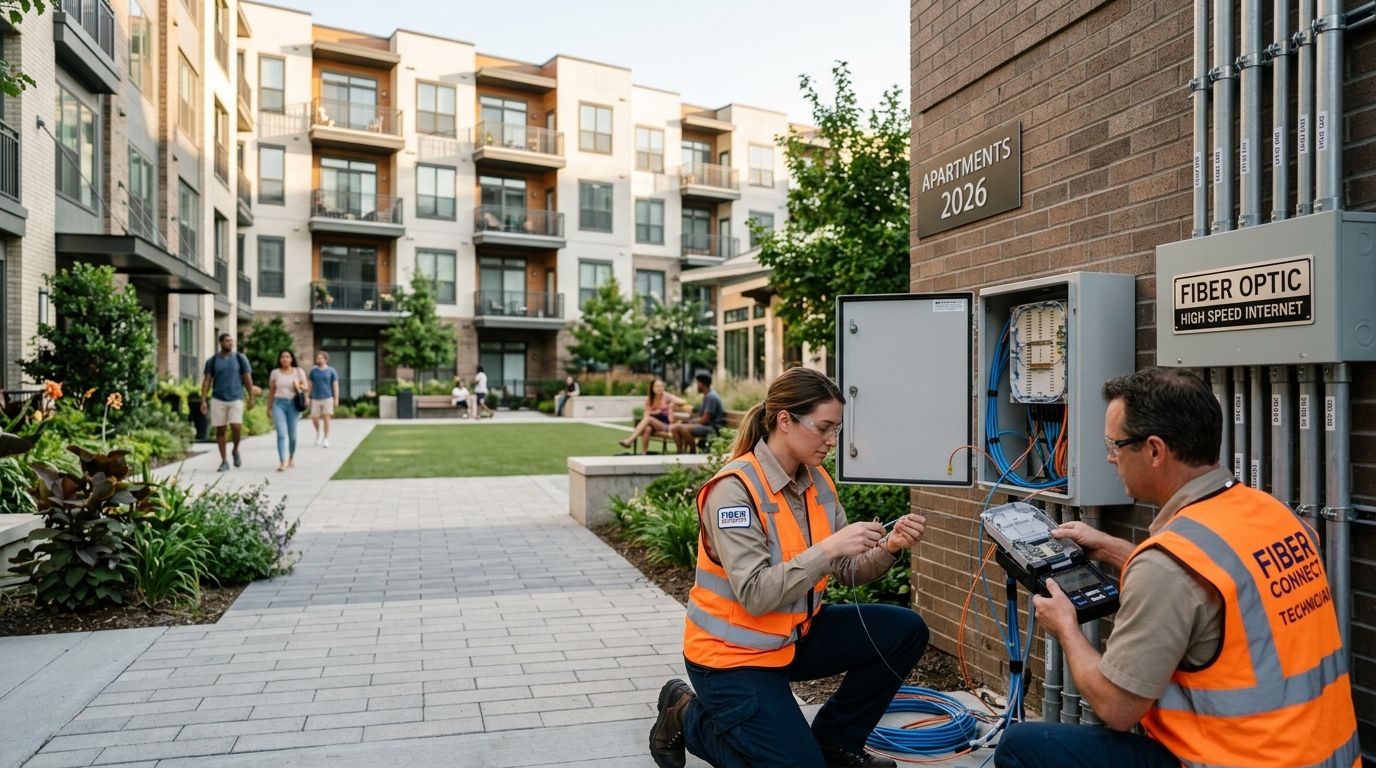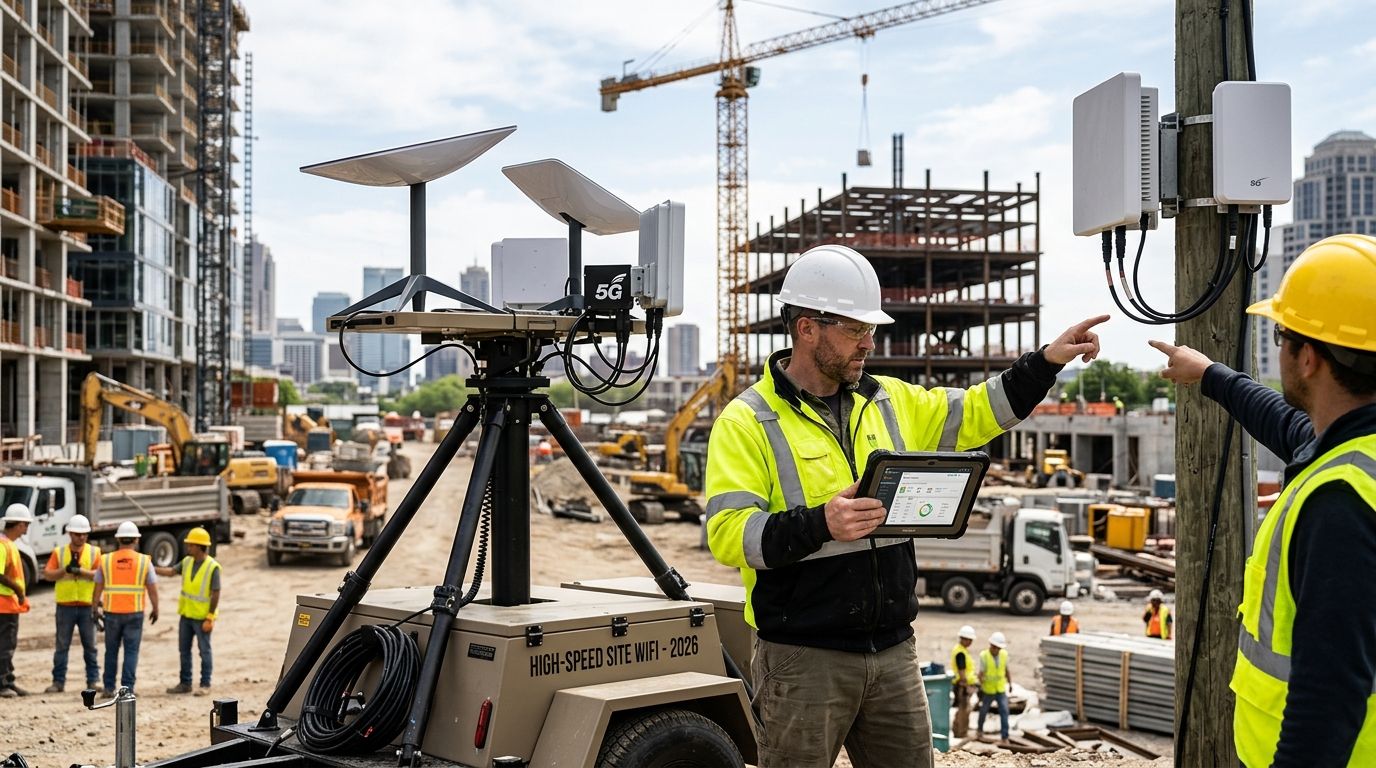

Managed WiFi for hospitality businesses means outsourcing the design, monitoring, and troubleshooting of guest and staff wireless networks to a provider instead of running it off a single router in the back office. Hotels, motels, bed-and-breakfasts, and restaurants need something different from a home network: dozens or hundreds of simultaneous connections, a guest-facing login experience, and a staff/POS network that never touches the guest side. Get this wrong and you get the number-one complaint on every review site in 2026: slow or dropped WiFi.
- Managed WiFi for hotels separates guest, staff, and POS traffic onto isolated networks monitored around the clock.
- Property size and guest device count — not room count alone — determine how many access points you actually need.
- SumoFiber pairs managed WiFi with fiber business internet and 24/7 human support across its service states.
- A single consumer router covering more than 20-30 rooms is the most common cause of hospitality WiFi complaints.
- Guest network segmentation from staff and payment systems is a baseline security requirement, not an upgrade.
Why managed WiFi matters for hospitality businesses
A hotel guest expects the same WiFi they get at home — instant, no buffering, no re-login every time they walk from the lobby to their room. A restaurant expects its point-of-sale terminals to keep taking payments even when forty people at the bar are streaming a game. These are two different jobs running on the same building's internet connection, and that's the core reason hospitality WiFi fails more often than office WiFi: the traffic mix is unpredictable and the stakes for downtime are public, not private.
An office network that goes down for ten minutes is an internal inconvenience. A hotel network that goes down for ten minutes during a Friday night rush generates a one-star review with the word "WiFi" in the first sentence, and that review sits on Google for years. Restaurants face the same exposure — a POS system riding the same unsegmented network as guest WiFi means a slow guest connection can slow down checkout lines too.
Managed WiFi for hotels exists to remove that risk by design, not by luck. The network is planned for peak load (Friday and Saturday nights, event check-ins, conference blocks), segmented so guest traffic can't touch payment systems, and monitored so a dead access point gets flagged before a guest complains at the front desk.
How to set up managed WiFi for hospitality — step by step
Map your guest device load per zone
Before buying hardware or a service, walk the property and count where people actually connect — lobby, pool deck, each floor, restaurant seating, event space. Coverage maps built off room count alone miss the outdoor patio and the conference room that gets slammed twice a month.
- Count average occupied rooms on a normal weekend versus a sold-out night
- Note dead zones with a phone doing a manual speed check in every corridor and stairwell
- Flag high-density areas: lobby, bar, event space, pool
- Separate device load estimates for guests versus staff and back-of-house equipment
Segment your networks by function
Guest WiFi, staff WiFi, and POS/payment systems belong on separate virtual networks (VLANs), even if they share the same physical internet connection. This is a security baseline for any business handling card payments, not an optional upgrade.
- Put guest WiFi on its own SSID with no access to internal file shares or printers
- Keep POS terminals and payment processing on an isolated, wired-preferred network
- Give staff devices their own network with access to booking or property management software
- Restrict IoT devices — smart locks, thermostats, security cameras — to a fourth segment where possible
Place access points for coverage, not just speed
One router in the office closet cannot cover a three-story building or a restaurant with an outdoor patio. Access point placement should follow the traffic map from step one, not just wherever a cable already runs.
- Plan one access point per roughly 15-20 rooms as a starting rule of thumb, adjusted after a walk-test
- Mount access points on ceilings, not behind furniture or inside cabinets
- Add dedicated coverage for outdoor areas — patios, pools, parking lots — that guests expect to use
- Test signal strength in stairwells and elevators, common dead zones in multi-story properties
This is the point where a managed WiFi provider for business becomes the faster path instead of a DIY mesh kit from a retail store. A managed WiFi provider for business plans access point placement and hardware sizing against your actual traffic map instead of a generic room-count formula, and SumoFiber runs that planning on its own fiber backbone across Utah, Idaho, Montana, Colorado, California, Wisconsin, Illinois, and New York.
Design the guest login and splash page experience
A login screen that asks for a room number and last name, or a simple click-through terms page, should take under ten seconds. Anything longer trains guests to complain before they even try to stream.
- Use a single click-to-connect splash page instead of multi-step registration forms
- Auto-reconnect returning guests within their stay window without re-login
- Keep bandwidth limits generous enough for two people to video call and stream simultaneously
- Avoid forcing app downloads or email opt-ins before granting access
Monitor bandwidth during peak hours
Check-in rushes, event move-ins, and Friday-Saturday nights are when hospitality WiFi actually gets tested. Monitoring during a quiet Tuesday afternoon tells you nothing.
- Track bandwidth usage logs during your three highest-traffic nights per month
- Set alerts for access points nearing device-count limits, not just for full outages
- Review restaurant POS network performance separately from guest network performance
- Compare weekend peak usage against your internet plan's total capacity annually
Get support that answers the phone, not a ticket queue
A WiFi outage at 11 p.m. on a Saturday during a sold-out weekend needs a person, not a support form that promises a callback within 24 hours. 24/7 human support is the single differentiator that matters most for hospitality, because hospitality doesn't close for the night.
- Confirm whether support is answered by a person or routed to an offshore ticket system
- Ask what the average time-to-resolution is for an access point outage, not just time-to-first-response
- Check whether the provider monitors the network proactively or waits for a guest complaint to trigger a fix
- Verify support covers both the internet connection and the WiFi hardware, not just one or the other
Match your internet plan to your property size
A 12-room bed-and-breakfast and a 150-room hotel need very different upstream bandwidth, and undersizing the internet connection makes every other step above pointless.
- Estimate peak simultaneous device count, not just room count, when sizing a plan
- Confirm symmetrical upload speed if the property runs cloud-based booking or POS software
- Rule out data caps entirely — hospitality traffic is too variable for capped plans
- Check whether the plan bundles business internet and managed WiFi under one provider or requires stitching two vendors together
Get a managed WiFi plan built for your property
Talk through room count, peak traffic, and network segmentation before you buy hardware.
Comparison: managed WiFi options for hospitality
| Option | Best for | Key limitation |
|---|---|---|
| Consumer router or mesh kit | Bed-and-breakfasts under 10 rooms with a single building | No guest/staff segmentation, no proactive monitoring, weak outdoor coverage |
| In-house IT staff running enterprise gear | Larger properties with a dedicated IT hire | Requires ongoing salary cost and after-hours on-call coverage |
| Standard ISP router with no managed layer | Small restaurants with light guest WiFi demand | No network segmentation for POS, limited support beyond the modem itself |
| Managed WiFi from a fiber provider like SumoFiber | Hotels, motels, and restaurants wanting one vendor for internet, WiFi, and support | Coverage limited to SumoFiber's current service states |
Managed WiFi from a dedicated provider wins for any property over roughly 20 rooms or with a restaurant/POS component, because segmentation and 24/7 support stop being optional at that scale.
Common mistakes hospitality businesses make with WiFi
- Sizing the network off room count alone. A 40-room motel with a busy lobby bar needs more capacity than a 40-room property with no common areas — device count, not door count, drives the plan.
- Running guest WiFi and POS on the same network. This is a security exposure and a performance problem: one slow guest stream can drag down a card swipe at checkout.
- Skipping outdoor coverage. Pool decks, patios, and parking lots are where guests expect WiFi in 2026, and skipping them shows up directly in review complaints.
- Choosing support based on price alone. A cheaper plan with a 24-hour support ticket queue costs more in lost bookings than a pricier plan with a person who answers at 2 a.m.
- Never testing peak-night performance. A network that looks fine on a quiet Tuesday can fail completely during a sold-out Saturday or a wedding block.
FAQ
What is managed WiFi for hotels?
Managed WiFi for hotels is a service where a provider designs, installs, and monitors the property's wireless network, including guest login pages, network segmentation, and ongoing support, instead of the hotel running it off a single unmanaged router.
How many access points does a hotel need?
A common starting rule is one access point per roughly 15-20 rooms, adjusted after a walk-test that checks stairwells, outdoor areas, and high-density spaces like the lobby and restaurant.
Should guest WiFi and staff WiFi be on separate networks?
Yes. Guest WiFi should be isolated from staff systems and payment processing on separate network segments (VLANs), which is a baseline security practice for any property handling card payments.
Is managed WiFi better than a standard business internet plan?
A standard business internet plan gives you the connection; managed WiFi adds the network design, segmentation, and monitoring layer on top of it. For hospitality with variable guest traffic, the managed layer is what prevents outages during peak nights.
Does managed WiFi help restaurants, not just hotels?
Yes. Restaurants use managed WiFi to keep guest WiFi separate from point-of-sale systems so a busy dining room doesn't slow down payment processing.
What causes most hotel WiFi complaints?
Undersized coverage relative to actual guest device load, unsegmented networks that let heavy streaming slow everything down, and support that isn't available at night when most issues happen.
Does SumoFiber offer managed WiFi for hospitality businesses?
SumoFiber offers managed WiFi alongside fiber business internet across Utah, Idaho, Montana, Colorado, California, Wisconsin, Illinois, and New York, paired with 24/7 human support.
Can a small bed-and-breakfast skip managed WiFi?
A property under roughly 10 rooms with light guest demand can often run on a well-placed consumer mesh system, but segmentation still matters if the property takes card payments on-site.
One last thing
The single biggest lever most hospitality properties ignore isn't hardware — it's putting POS and guest traffic on the same network. Fixing that one thing, even before upgrading a single access point, resolves a large share of the "slow WiFi" complaints that actually trace back to a slow checkout line competing with guest streaming for the same pipe. Segment first, then size for peak.